
Presentation
Yacht Class n°45 june-july-august 2026
Cantiere Del Pardo
A distinct identity, consummate craftsmanship, and a minimalist design: this flagship, built in Italy, embodies the very essence of the brand. Equipped with triple IPS propulsion and conceived for extended stays on board, she offers every comfort required to further refine a style emblematic of her Dutch heritage. Under the influence of the Mediterranean, she reveals a new dimension, culminating in a truly striking result.
Written by : Nicolas Massines Photos : Gianluca Napthalina Camporesi
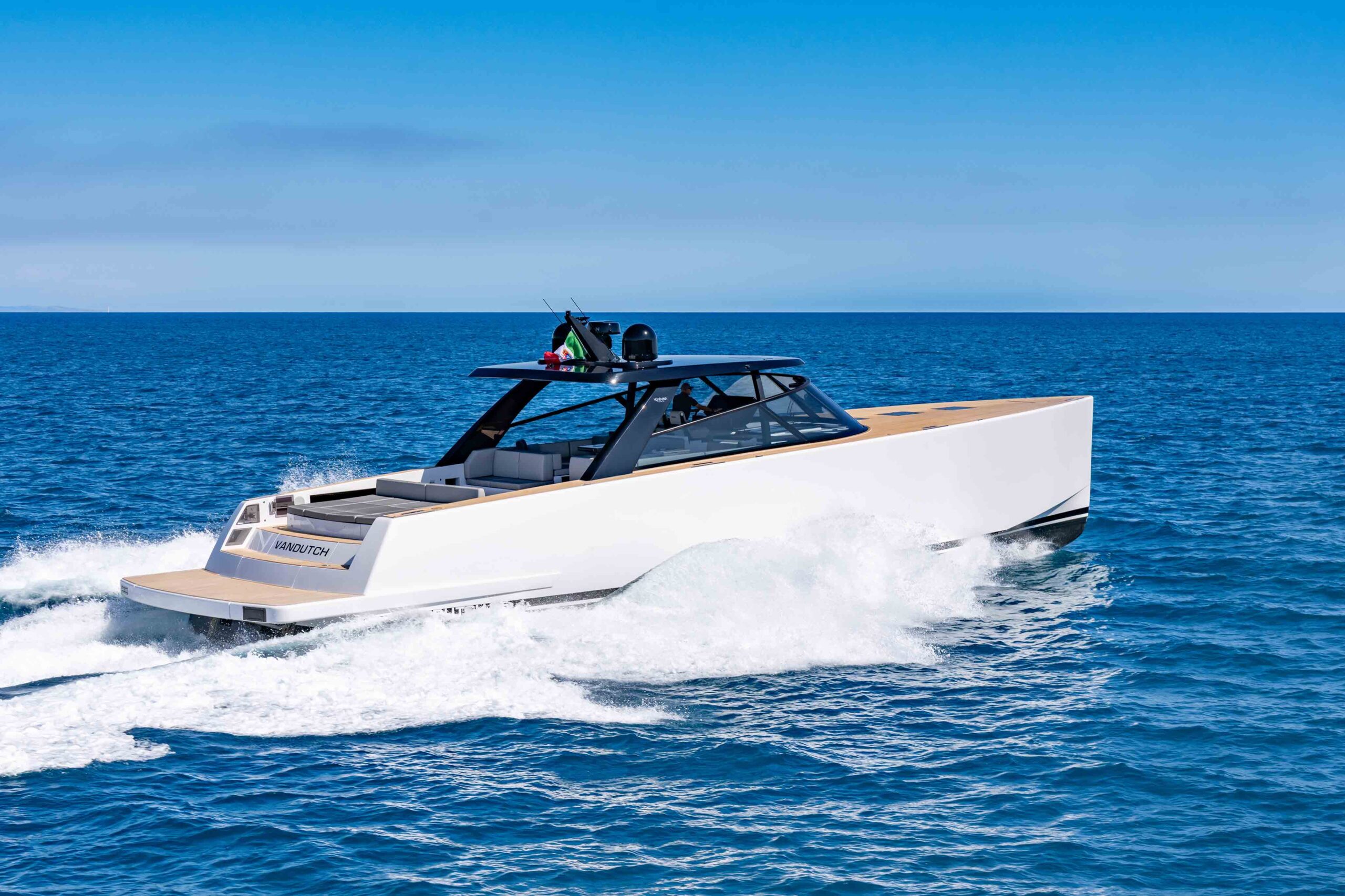
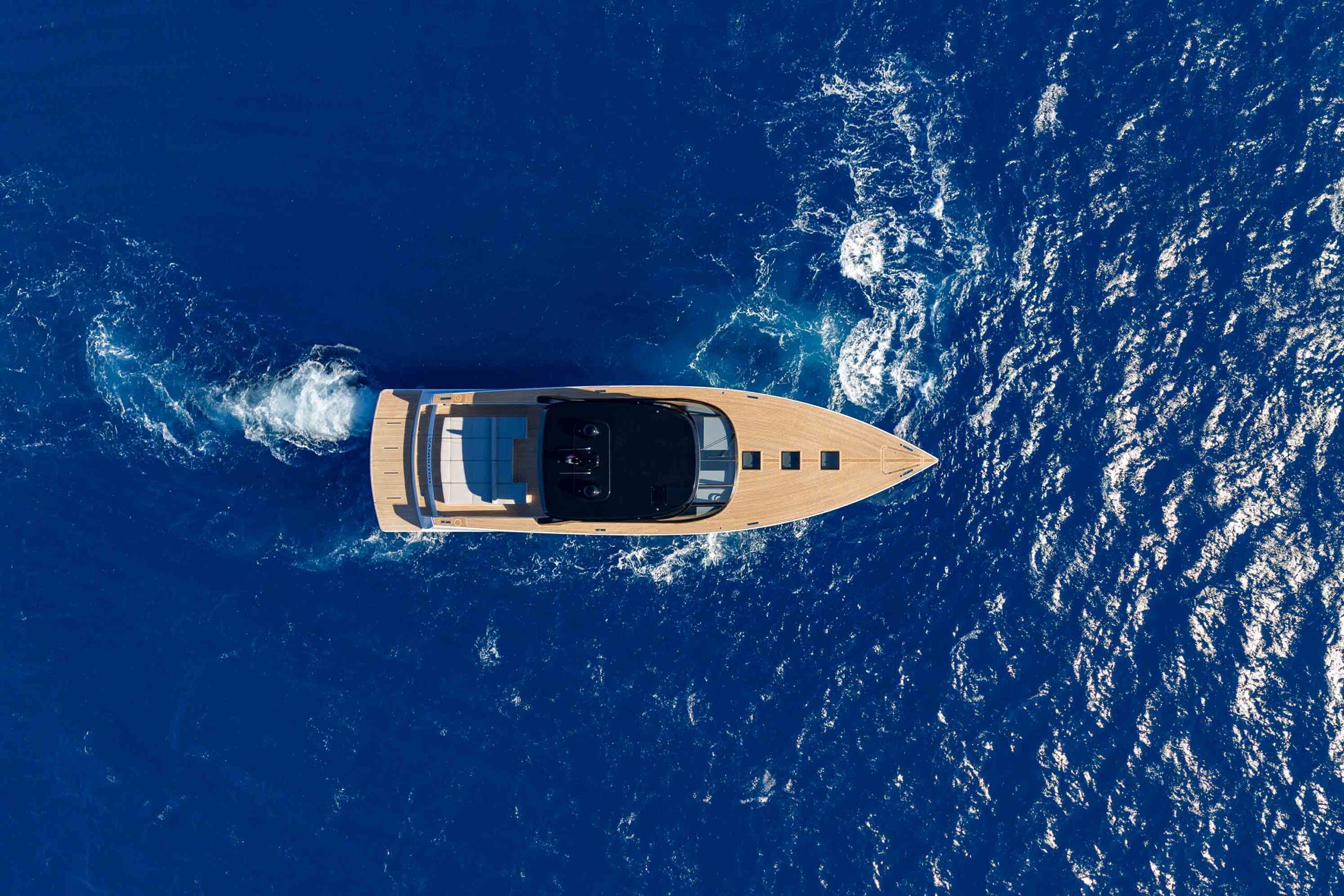
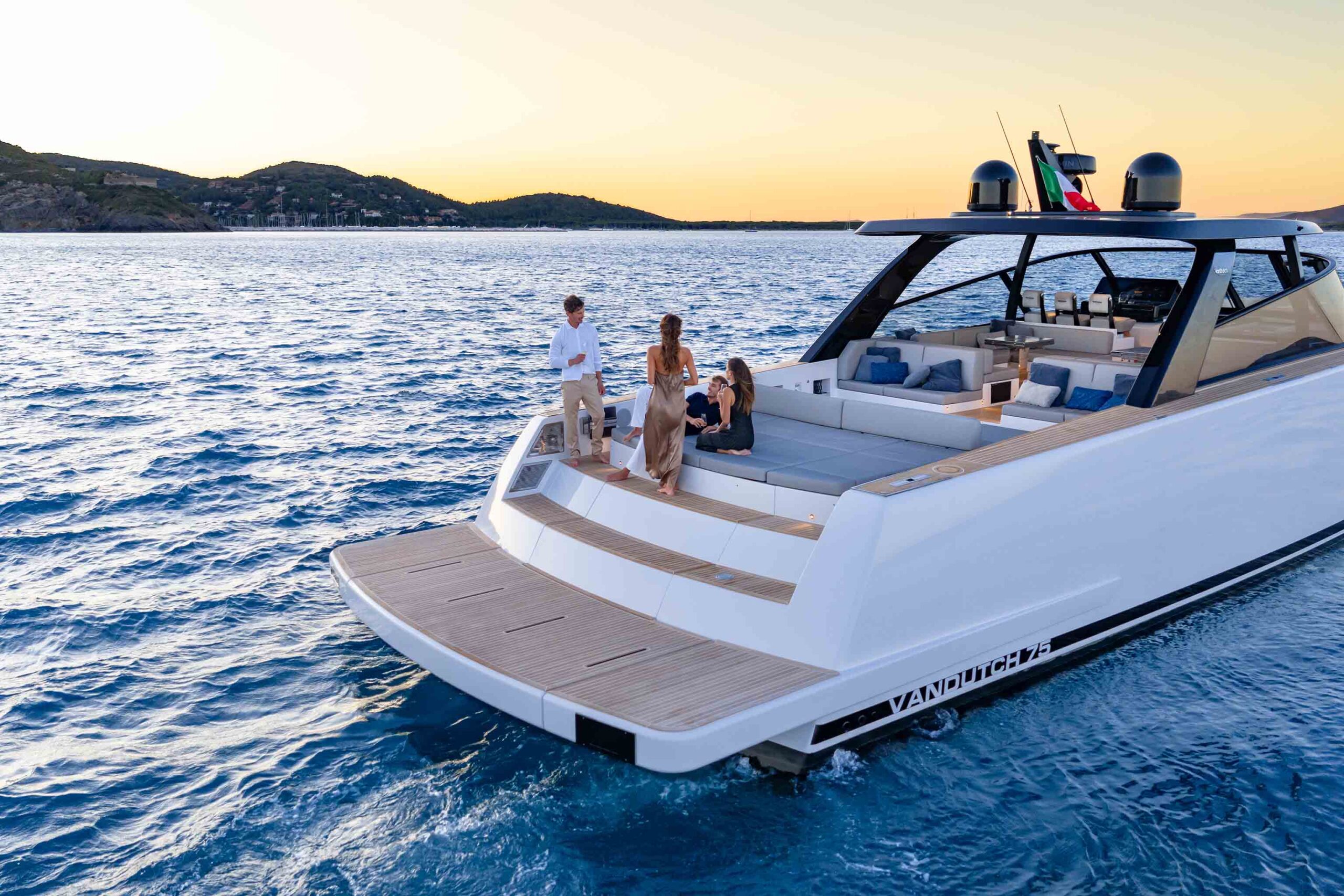
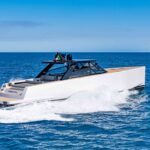
To envision oneself. Such is the immediate response when one finds oneself before VanDutch’s new flagship-and in the most fitting of settings: the Mediterranean. A sea defined by light, contrast, and shimmering reflections, where design has long celebrated purity of line and a fluid dialogue between interior and exterior living. Though often portrayed as the realm of poets and artists, it is equally the cradle of iconic designers and creators of singular yachts. Without indulgence in overt lyricism, the VanDutch 75 absorbs these influences and reinterprets them with a distinctly contemporary sensibility-one shaped by restrained minimalism, generous open volumes, and perfectly fluid circulation. This is 2026: imagery prevails over language, and in purely aesthetic terms, this new flagship excels unequivocally. Whether it is the broad, teak-clad aft deck, the full-carbon hardtop, or the elegantly conceived bathing platform that first commands attention is almost beside the point. The eye, quite simply, is held captive by the purity of her silhouette above the waterline.
Concealed anchor, triple IPS propulsion and a top speed of 40 knots
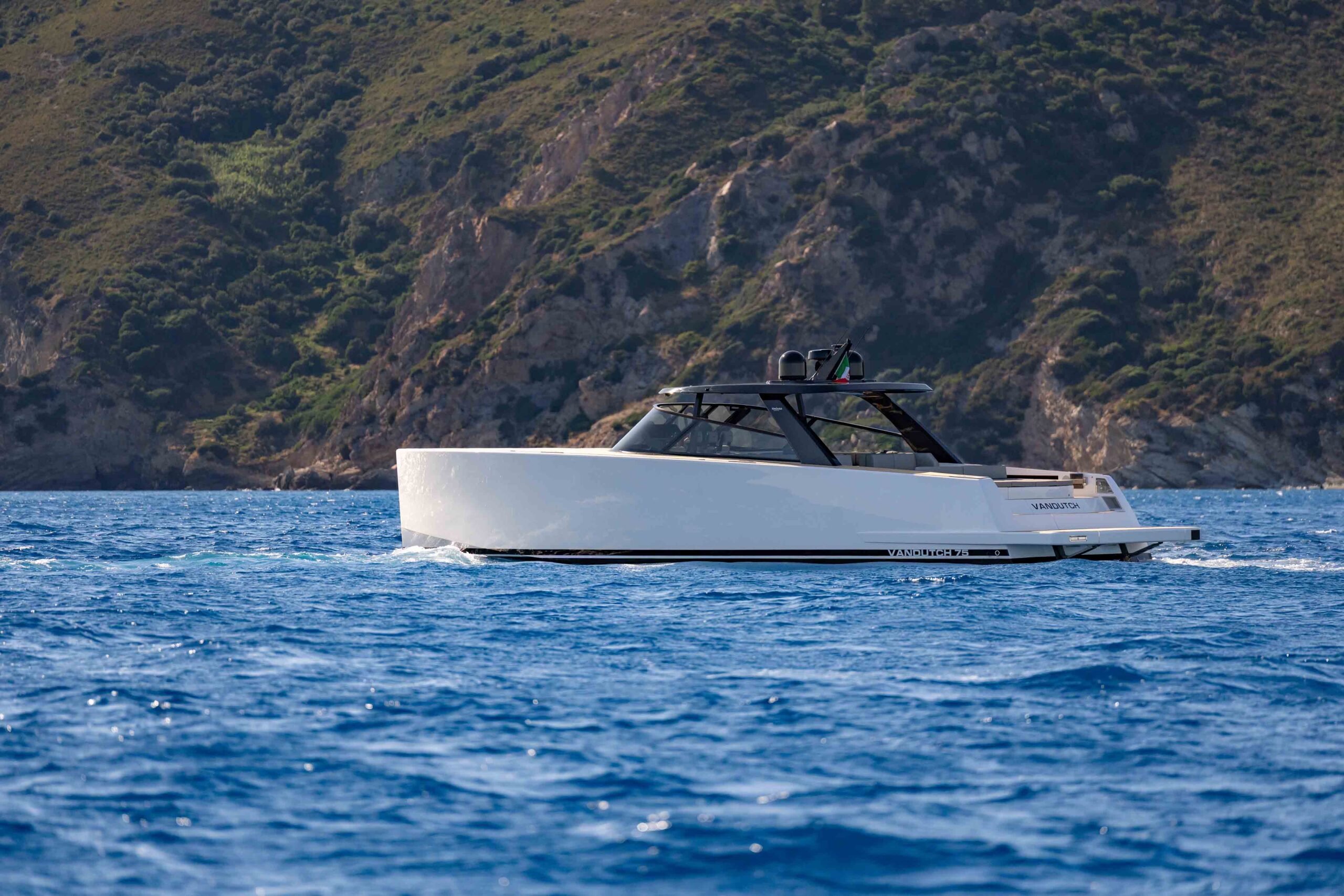
A sensation to which the Dutch yard has accustomed us since the launch of its first 40-foot unit in 2008, which rapidly became a flagship model on waters such as those of Miami and Saint-Tropez. Subsequently, with the 55-foot version, the range evolved from a day boat into a weekender, offering genuine onboard accommodation. The acquisition by Cantiere del Pardo in 2020 enabled the range to develop towards a more yacht-oriented ethos, even in its open versions, as this VanDutch 75 aptly demonstrates. The naval architecture is entrusted to the Mulder Design studio, renowned since 1979 for its masterful combination of aesthetics and engineering. This technical expertise is evident in several aspects, notably the triple IPS propulsion system, which enhances manoeuvrability, delivers commendable performance-reaching 40 knots at top speed and 27 knots in cruising mode-and, above all, frees up valuable interior space. Particular mention must also be made of the anchor, which is housed within the hull rather than at the bow. By integrating it into the wetted surfaces, VanDutch eliminates all visual clutter and further emphasises a minimalist aesthetic. This solution lowers the centre of gravity; deployment is managed via camera, and, crucially, the anchor remains invisible both underway and at anchor, thereby preserving the purity of the bow’s lines. Among the many other innovations is the highly carbon-fibre hard top, which integrates seamlessly into the vessel’s overall profile while maintaining a relatively low silhouette.
A design inspired by classic sports cars
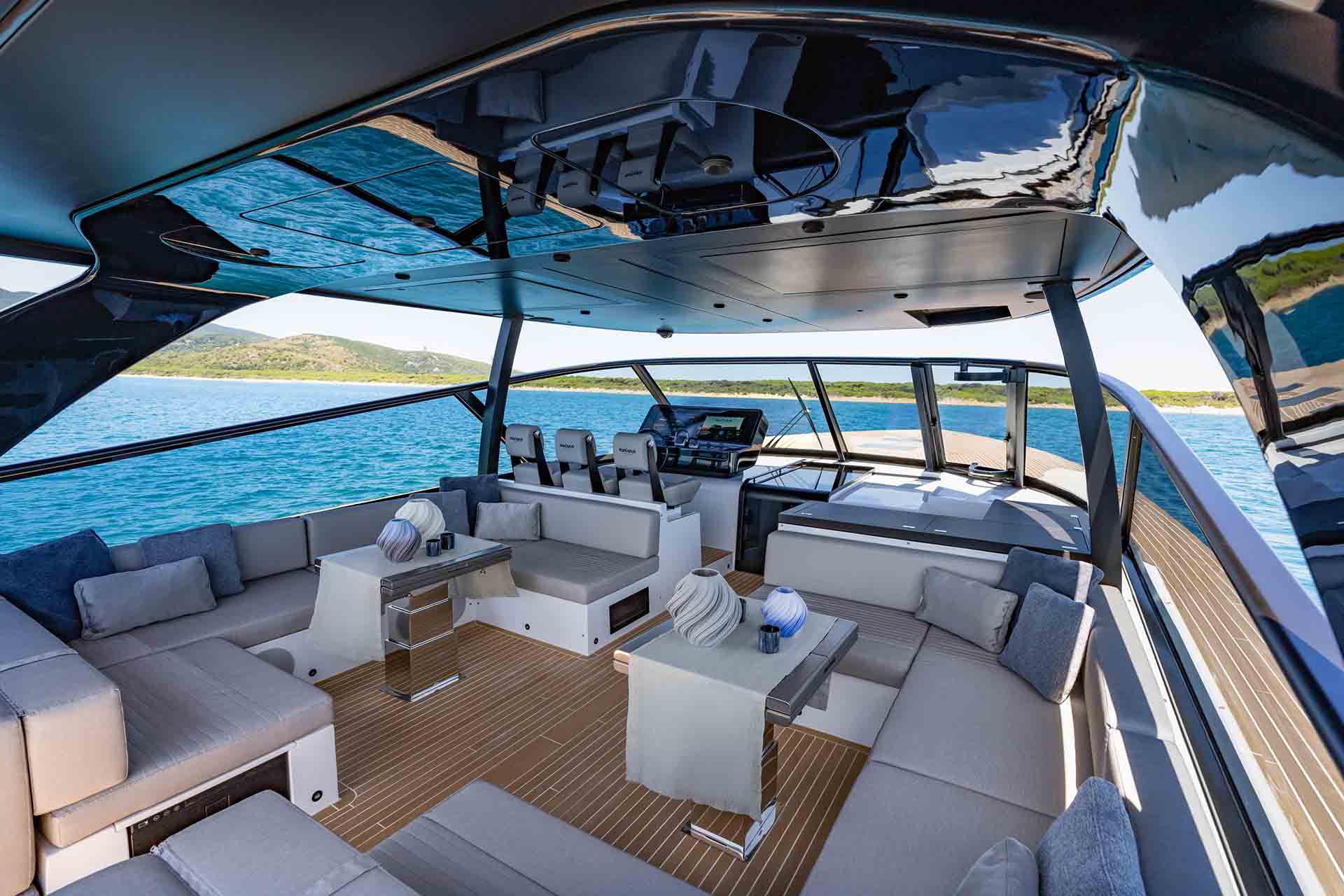
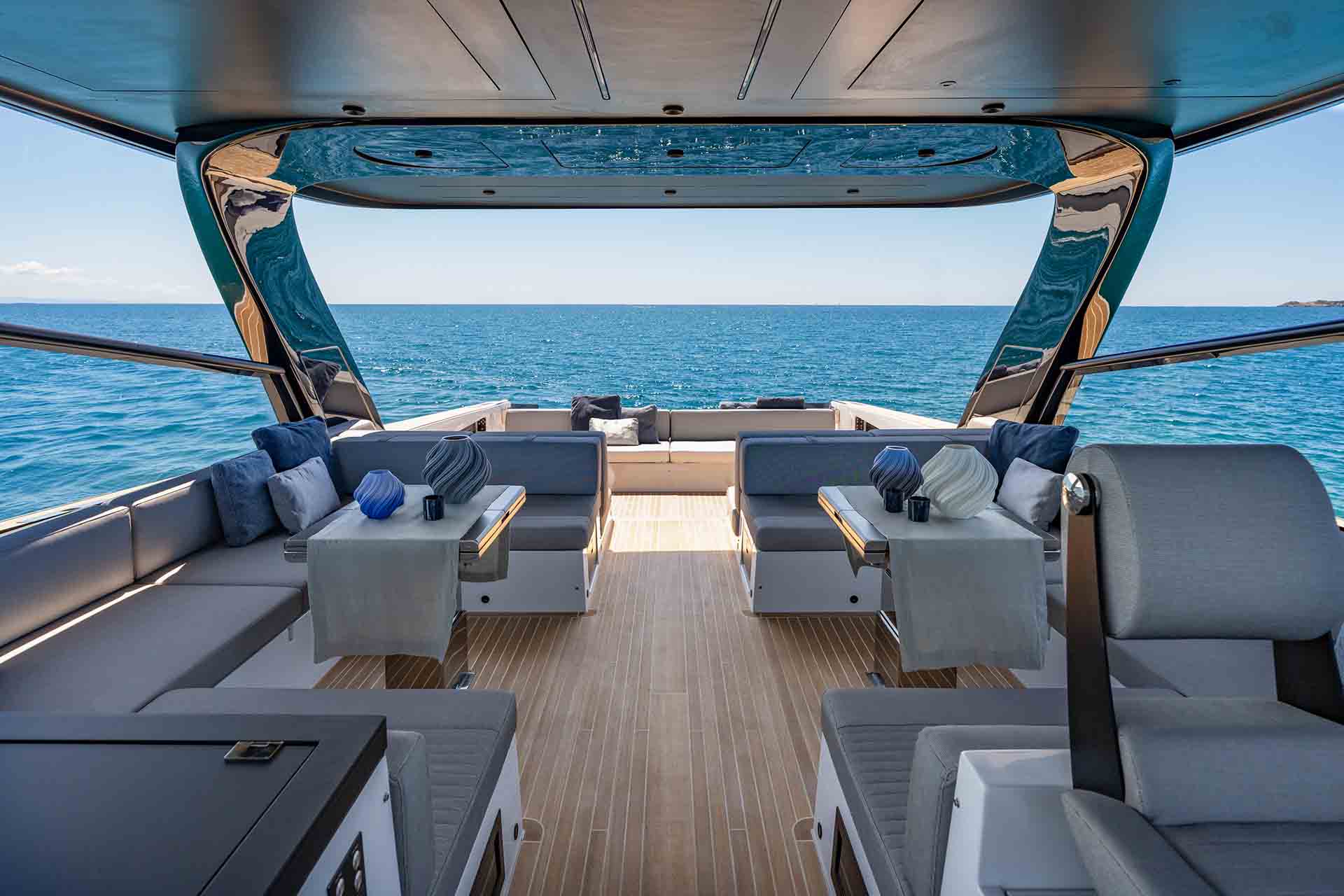
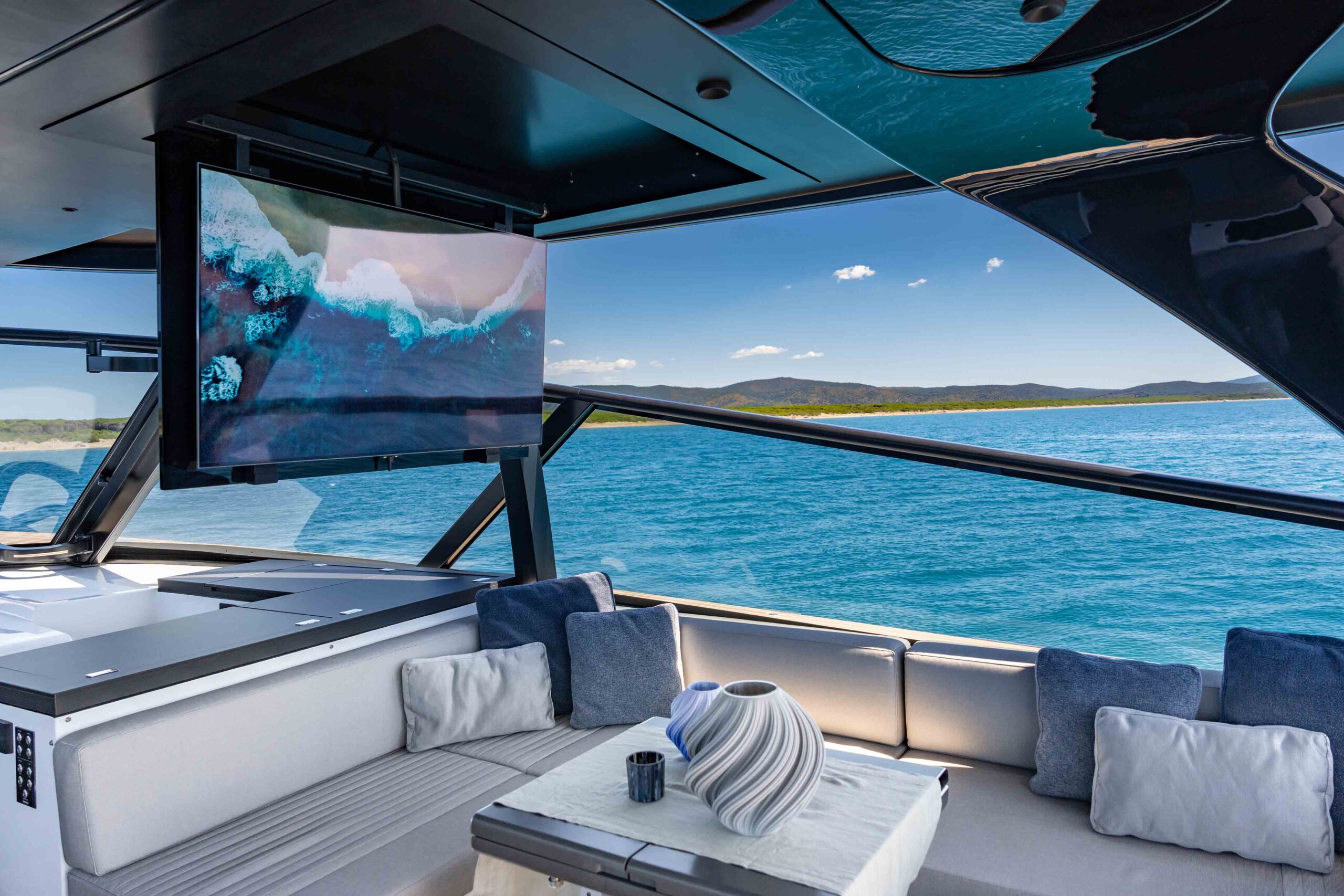
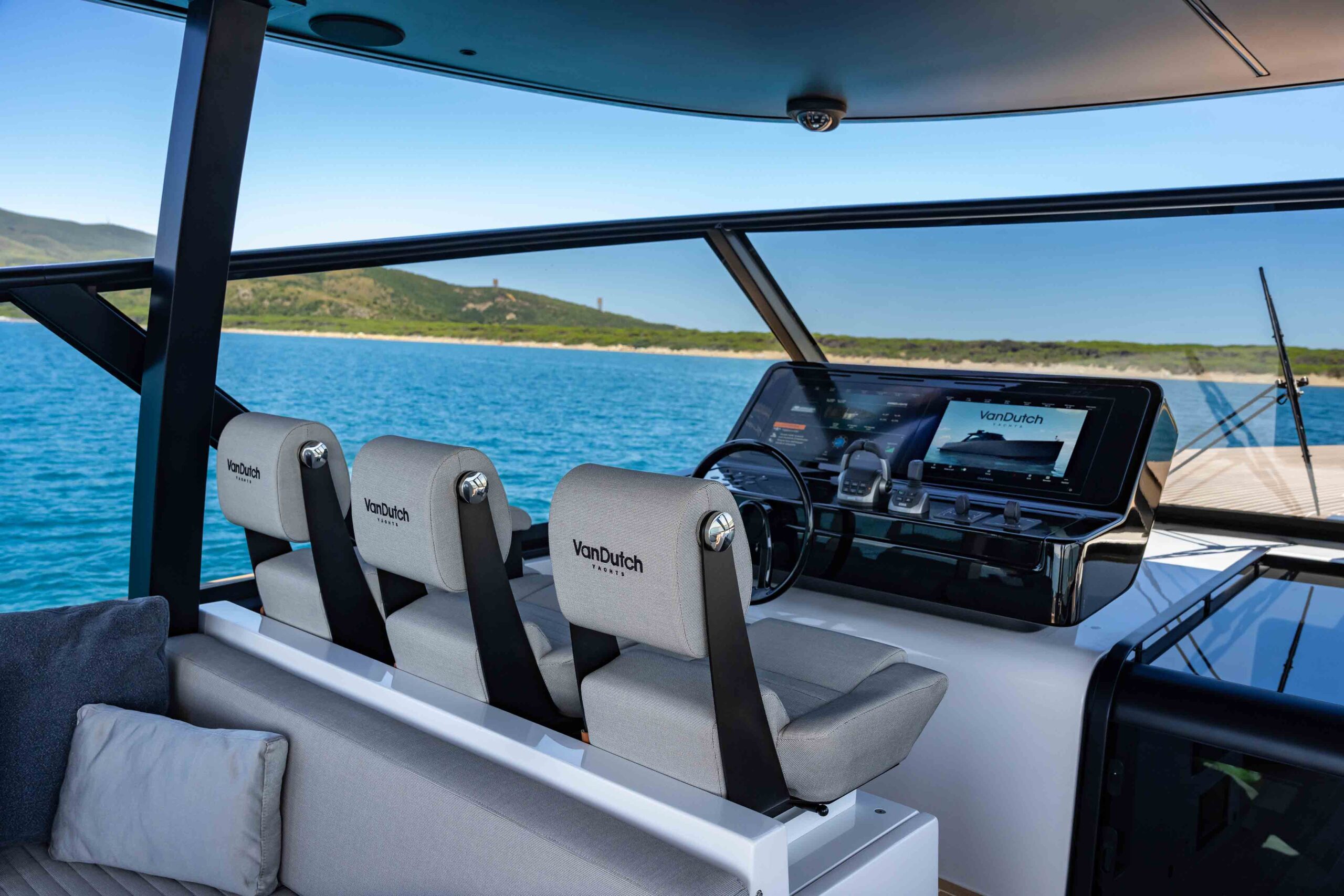
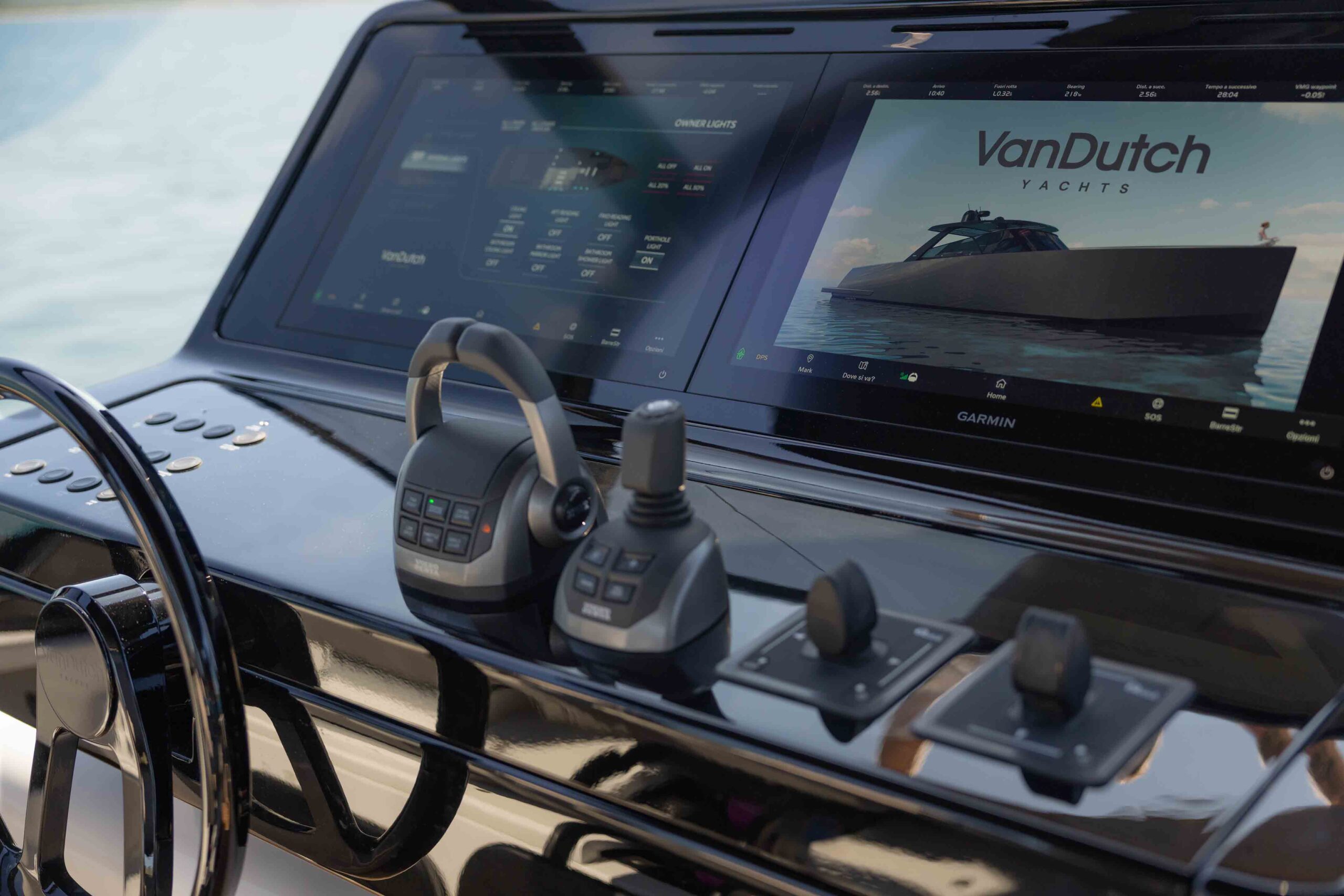
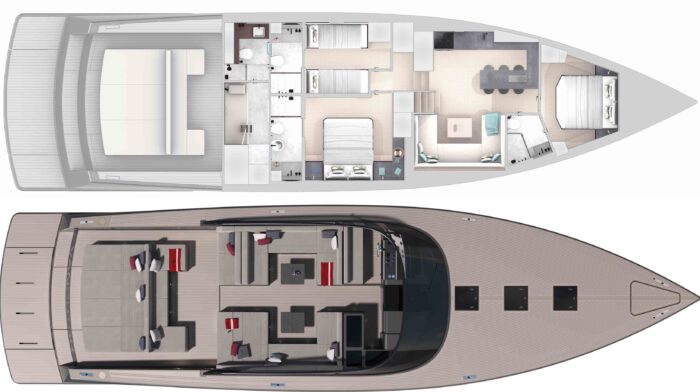
A door seamlessly integrated into the windscreen allows for fluid access to the foredeck, with no disruption to the aesthetic, further enhanced by a removable section of the hard top to facilitate headroom clearance. The ribbed seating of the console draws inspiration from classic sports car design, achieving a particularly refined visual and tactile finish. The helm station, positioned to port, features three bolster seats, as elegantly appointed as the rest of the vessel, facing a dual Garmin instrumentation suite perfectly integrated into the structure. Visibility is both over the surroundings and across the deck and cockpit. Particular attention must be paid to the craftsmanship of the natural teak decking which, for the first time at VanDutch, is finished with white caulking, delivering a contemporary result that reflects the brand’s visual identity. The cockpit, offering a surface area of 45 square metres, comprises two large opposing sofas and two symmetrically arranged tables, enabling the accommodation of up to ten guests.
“To embrace change and create a new iconic style” – Francesca Burdisso
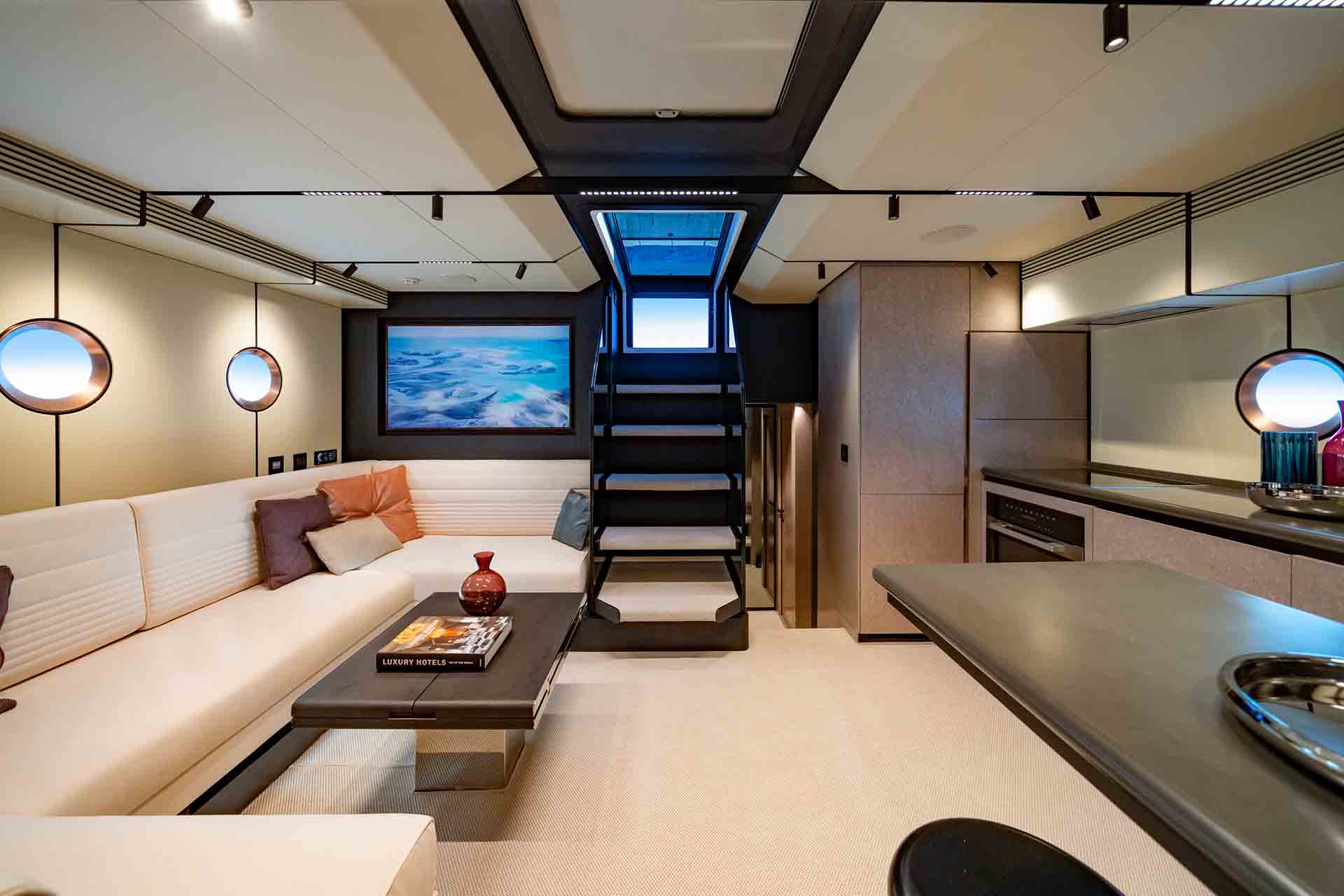
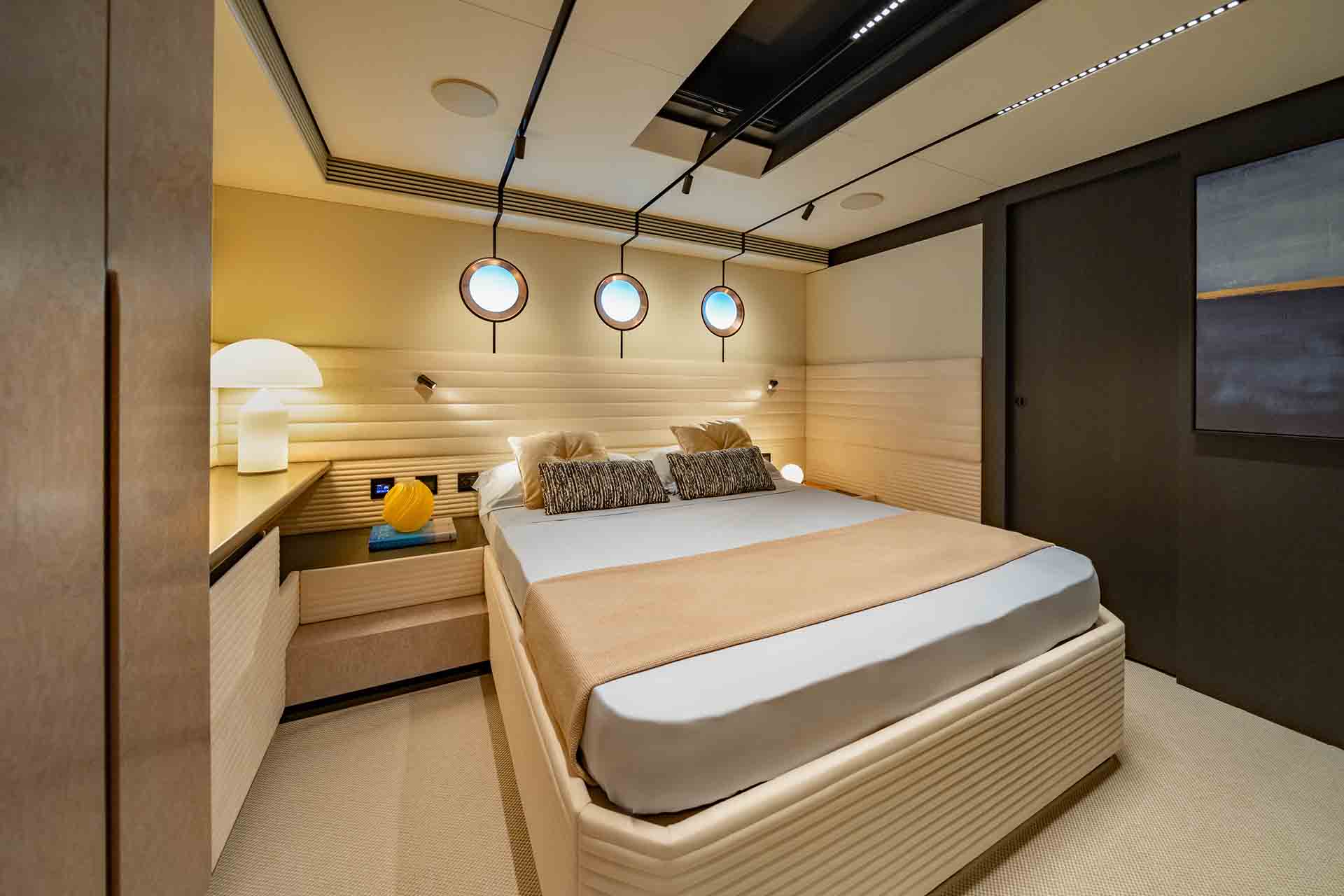
Access to the interior is gained via a black plexiglass door, as substantial as it is easy to handle, followed by a short flight of steps leading below. The interior arrangements are entrusted to BurdissoCapponi Yachts & Design, which offers two distinct interpretations. The “Smooth” version presents a warm ambience, dominated by fawn mahogany tones, whereas the version featured in this trial, the “Cool”, showcases pearlescent wood veneers in fresh hues, set against striking contrasts with a matte slate-black timber finish. The first feature to draw the eye is the trio of portholes set into the starboard topsides. They bear a striking resemblance to genuine openings positioned below the waterline; in reality, however, they are cleverly concealed light fittings designed to illuminate the starboard section, which hosts a U-shaped sofa upholstered in beige suede. The open-plan galley, located to port, adheres to the principles of minimalist design and offers excellent storage capacity. Six bar stools provide for relaxed dining. “We imposed no constraints upon the designers,” notes Paolo Bredy, Project Manager at Cantiere del Pardo. This freedom is clearly reflected in the creativity brought by Francesca Burdisso to the layout and the selection of materials. “The shipyard granted me almost complete creative freedom. They sought change and the creation of a new iconic style,” she adds. The result is undeniably compelling. A bathroom equipped with a spacious shower is positioned opposite the galley on the starboard side, employing black resin to convey a distinctly contemporary aesthetic. A generous VIP cabin is located forward, where light tones prevail, and excellent ventilation is ensured by one of the three large portholes set into the roof. Here again, the faux hull portholes are present, along with a large mirror placed at the head of the bed. Moving aft, a few steps lead down to the port-side twin cabin, which benefits from its own bathroom. Although the lighting is artificial, it appears remarkably natural, such is the sophistication of the illumination design, enhancing both the sense of space and overall comfort. The owner’s cabin, situated to starboard, offers a generously proportioned berth, ample storage, and a compact refrigeration unit for refreshment during long summer nights. The en-suite bathroom impresses with its headroom as well as the quality of its textures and finishes. The VanDutch 75’s capacity in terms of storage, berths and dining facilities clearly demonstrates her suitability not merely for weekend use, but for extended cruising of up to a full week, in a level of comfort that is as refined as it is efficient.
Technical sheet