





Presentation
Yacht Class n°45 june-july-august 2026
CRN – Ferretti Group
The shipbuilder CRN, a member of the Ferretti Group, has, for more than sixty years, established a distinguished reputation in the design of bespoke yachts and superyachts. With the unveiling of “Amor à Vida”, the very finest that the world of luxury yachting has to offer is brought together within a single vessel. An exceptional visit.
Written by : Christophe Varène – Photos : Maurizio Paradisi et Giorgio Baroni
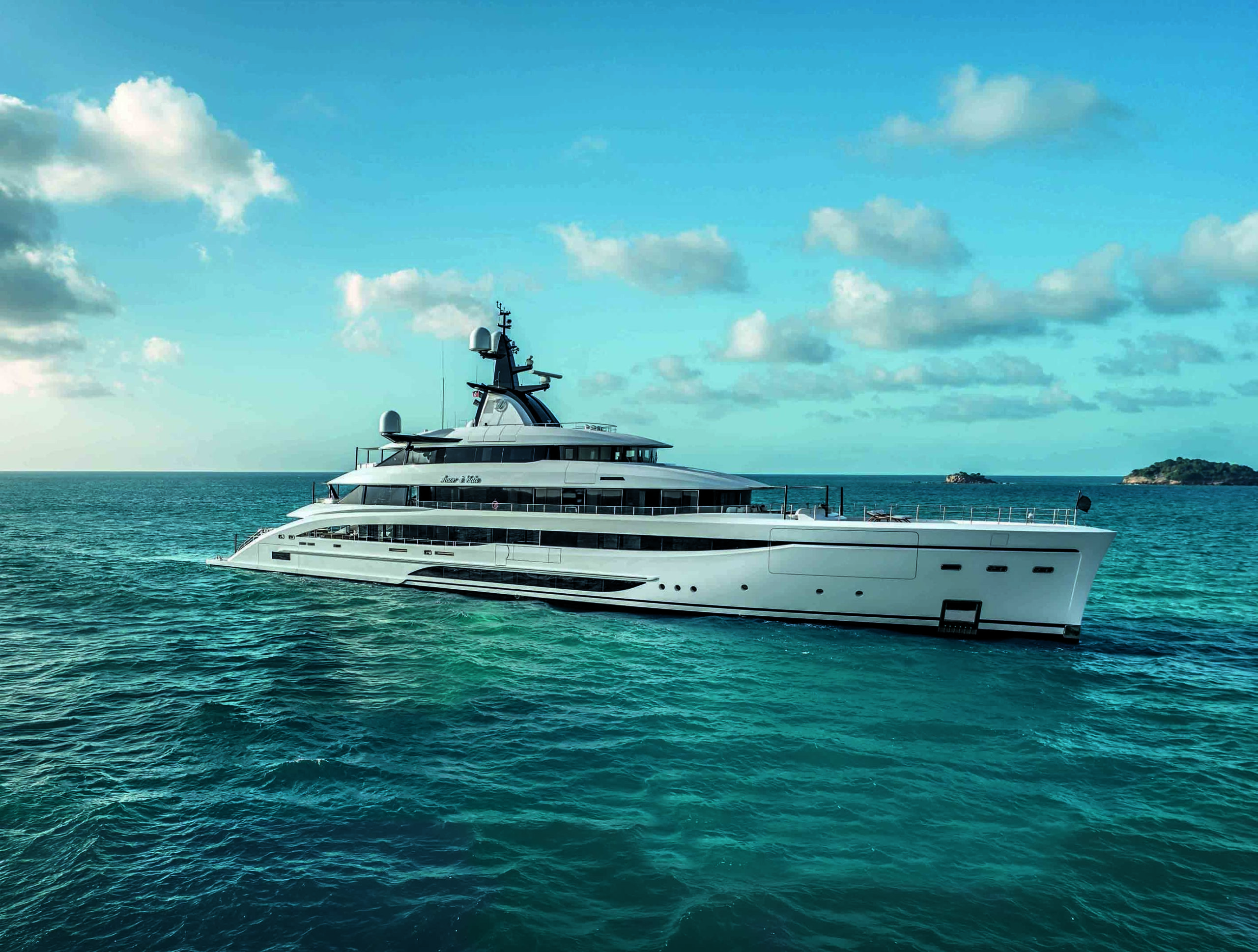
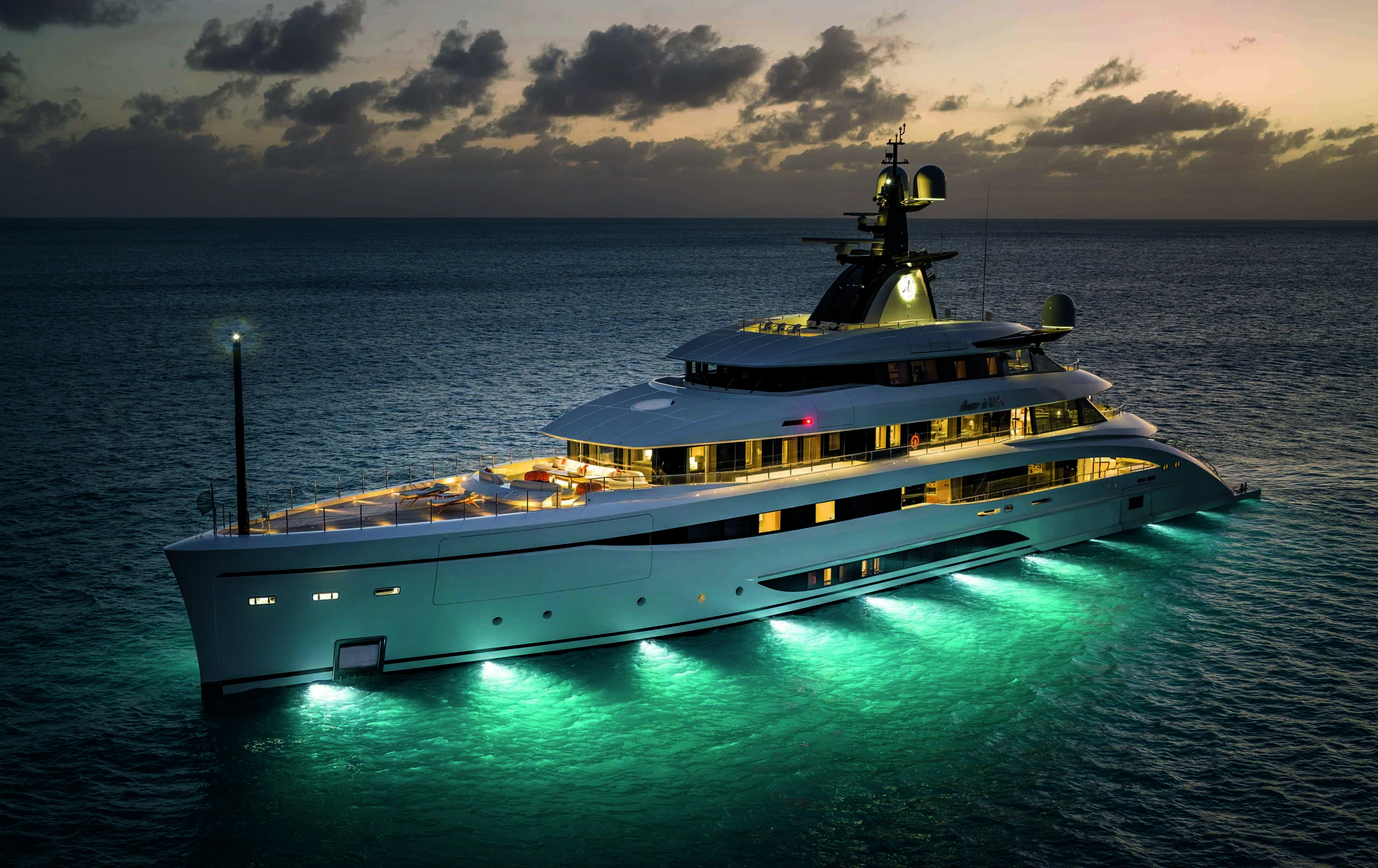
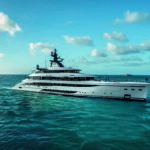
Unusually, we have been invited to the shipyard in Ancona, Italy, to visit the latest creation from CRN, the imposing and elegant “Amor à Vida”. Even when moored alongside the quay, this superyacht of more than 67 metres cannot fail to impress. The collaboration between CRN’s engineering department, the Ferretti Group’s superyacht division, and the design studio Nuvolari Lenard has given rise to a fluid silhouette, characterised by a stern of subtle sheer and flare, together with a pyramidal superposition of decks interspersed with white and black bands, softening towards the stern in gentle curves. The result is a most accomplished profile, one that should stand the test of time. Since 1963, CRN (an acronym for “Costruzioni e Riparazioni Navali”) has produced truly distinctive vessels, reflecting a steadfast commitment to meeting owners’ wishes, needs, and exacting requirements, as well as to the application of exceptional, high-end craftsmanship.
Every detail carefully considered
The project, initiated in 2022 under the code name “Maranello”, involved more than 27 meetings between CRN, the owner, the captain, and the designers (led by Nuvolari Lenard’s artistic director, Valentina Zannier) in order to fulfil the brief as precisely as possible: to create an elegant and contemporary superyacht, extensively open to the sea and sunlight, imbued with a soothing atmosphere and incorporating the latest technologies. Every detail has been thoughtfully addressed, from beds that can be raised to facilitate the work of the stewardesses, to QR codes in the cabins enabling control of lighting, air conditioning, television, and underfloor heating; from automatic window closures in heavy seas, to wardrobe doors operated by key card. Discovering “Amor à Vida” offers a tangible insight into this pursuit of excellence.
A breathtaking owner’s suite
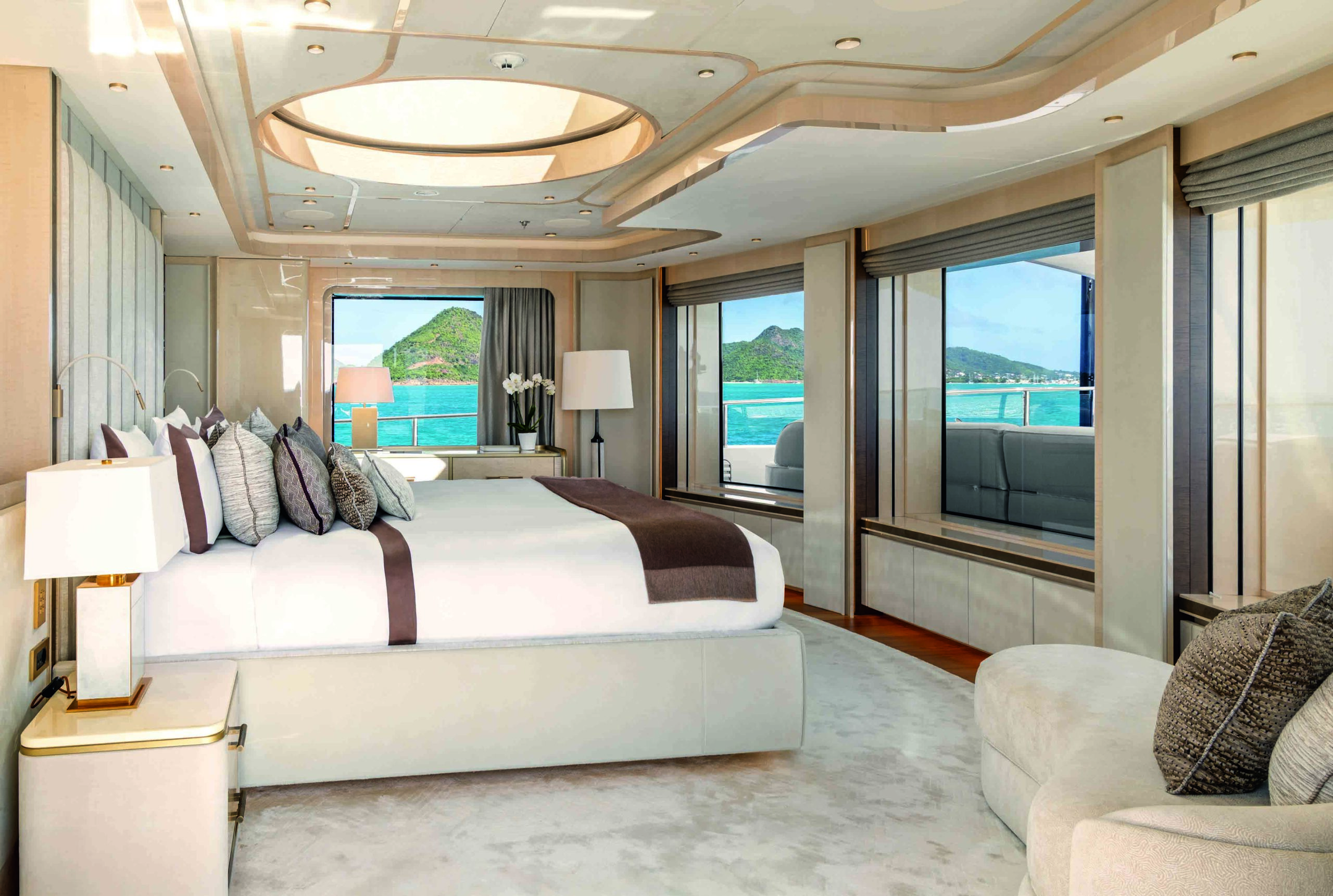
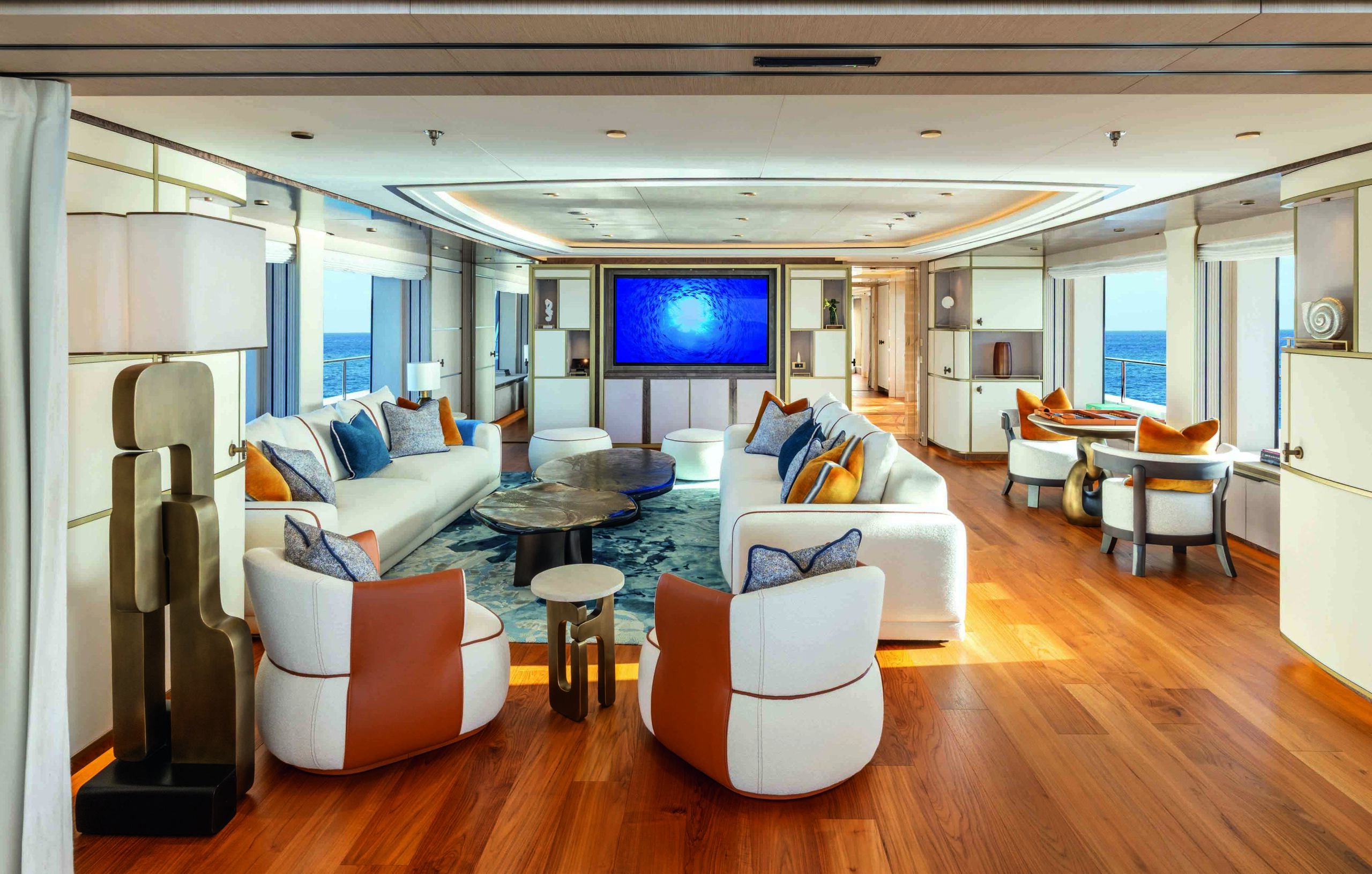
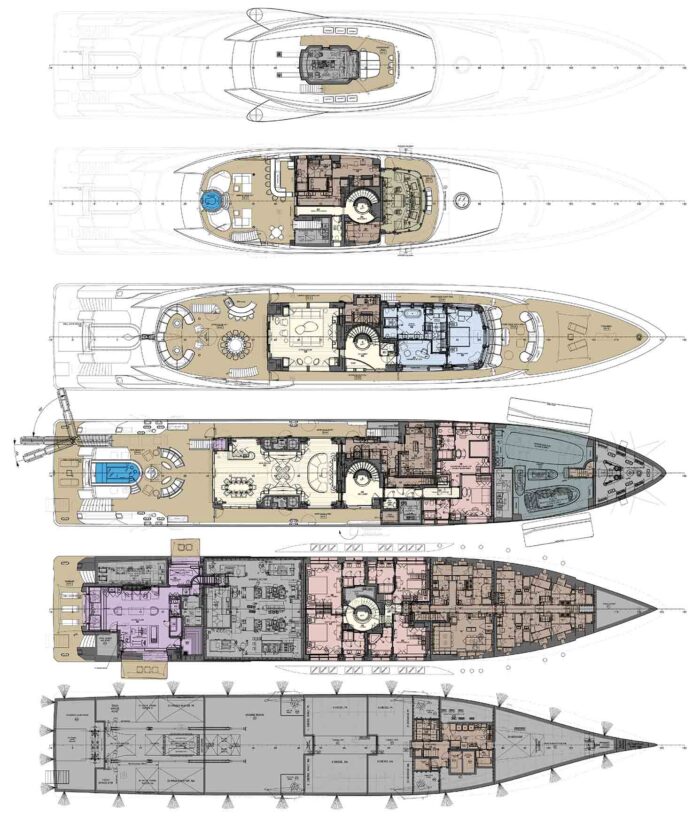
Given the scale of this superyacht and her six decks (from the crow’s nest down to the holds) this is not the place for a conventional tour. Instead, we shall highlight her principal assets and draw attention to her most remarkable features. Let us begin, without delay, with the owner’s suite, located on the upper deck, where it occupies approximately half of the enclosed space. Access is gained via the study, where all the furniture (indeed, as throughout the vessel) is custom-made, favouring soft, rounded forms and employing the finest materials: the desk combines resin, metal, and nubuck, while a console brings together wood and bronze. One then discovers the sleeping area. It is, quite simply, breathtaking: glazed on three sides, it offers panoramic views; the bespoke bed, composed of two mattresses, is bathed in light from a partially transparent ceiling (naturally equipped with blackout capability); and the finishes are exemplary, whether in the sycamore joinery or the fabrics. The adjoining bathroom, with its fluted marble walls, features a bathtub with a sea view. As the entire deck is reserved for the owners, it also includes a spacious family lounge, where two sofas, two armchairs, and occasional seating are arranged around a pair of coffee tables.
A wheelhouse like a work of art
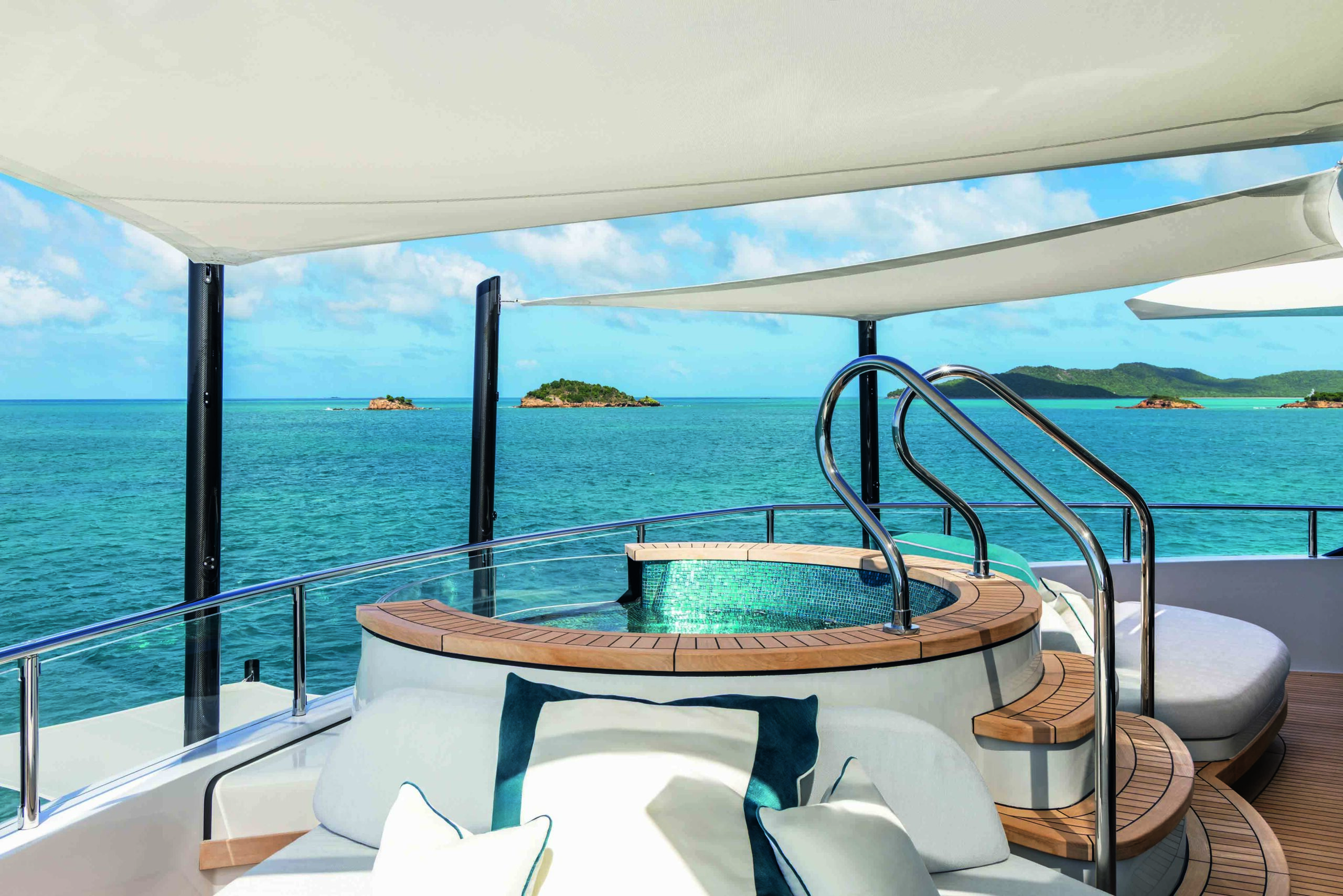
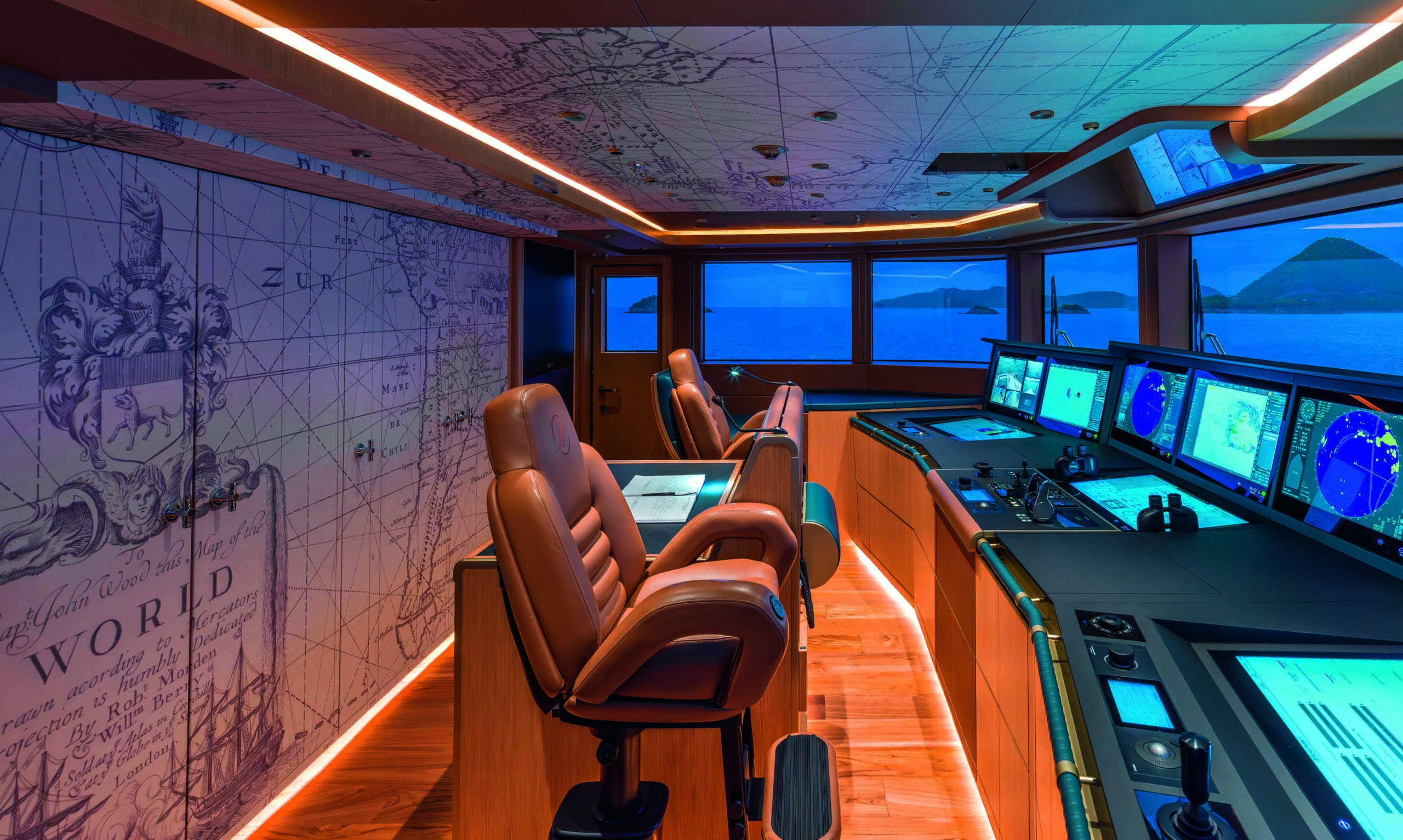
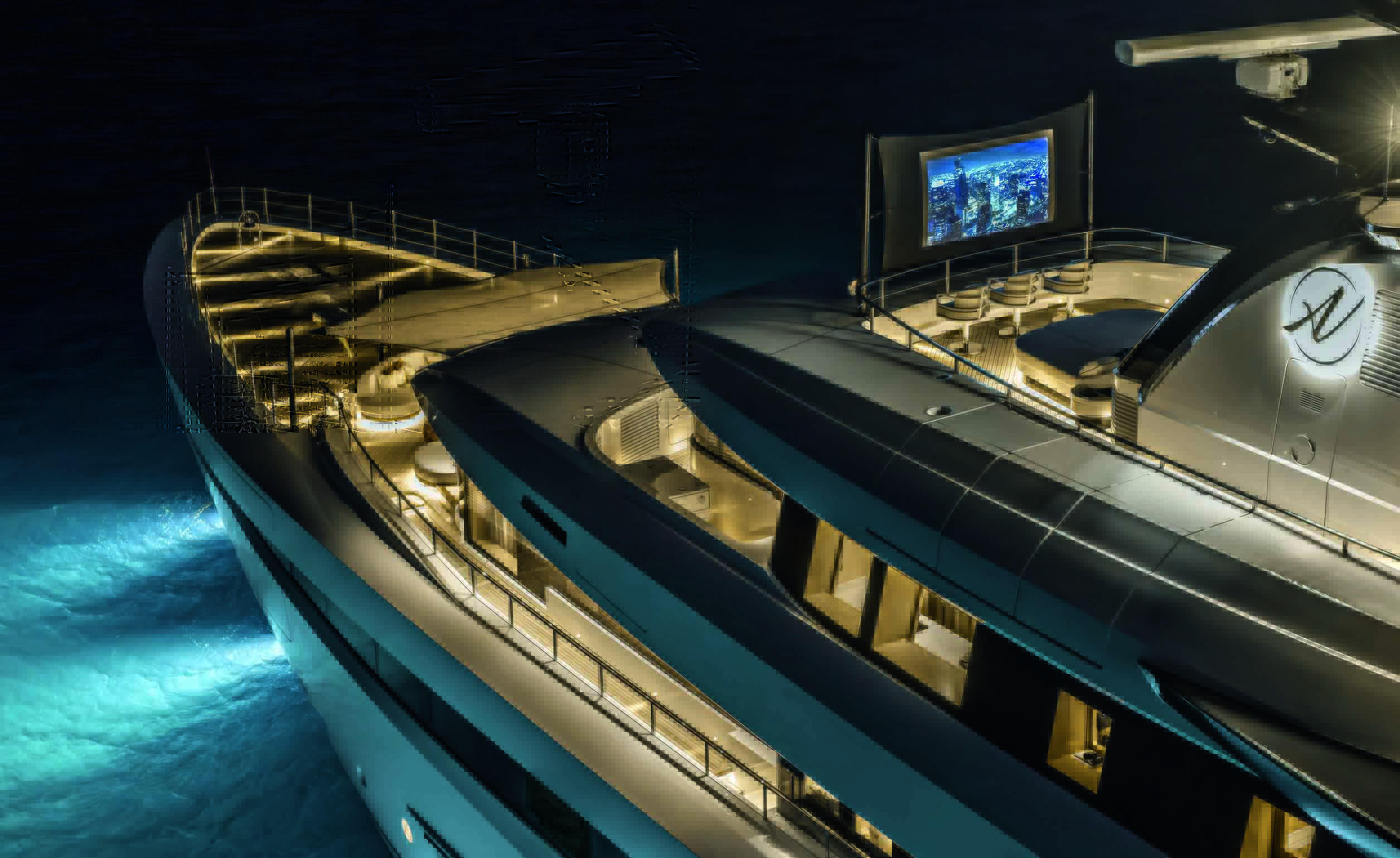
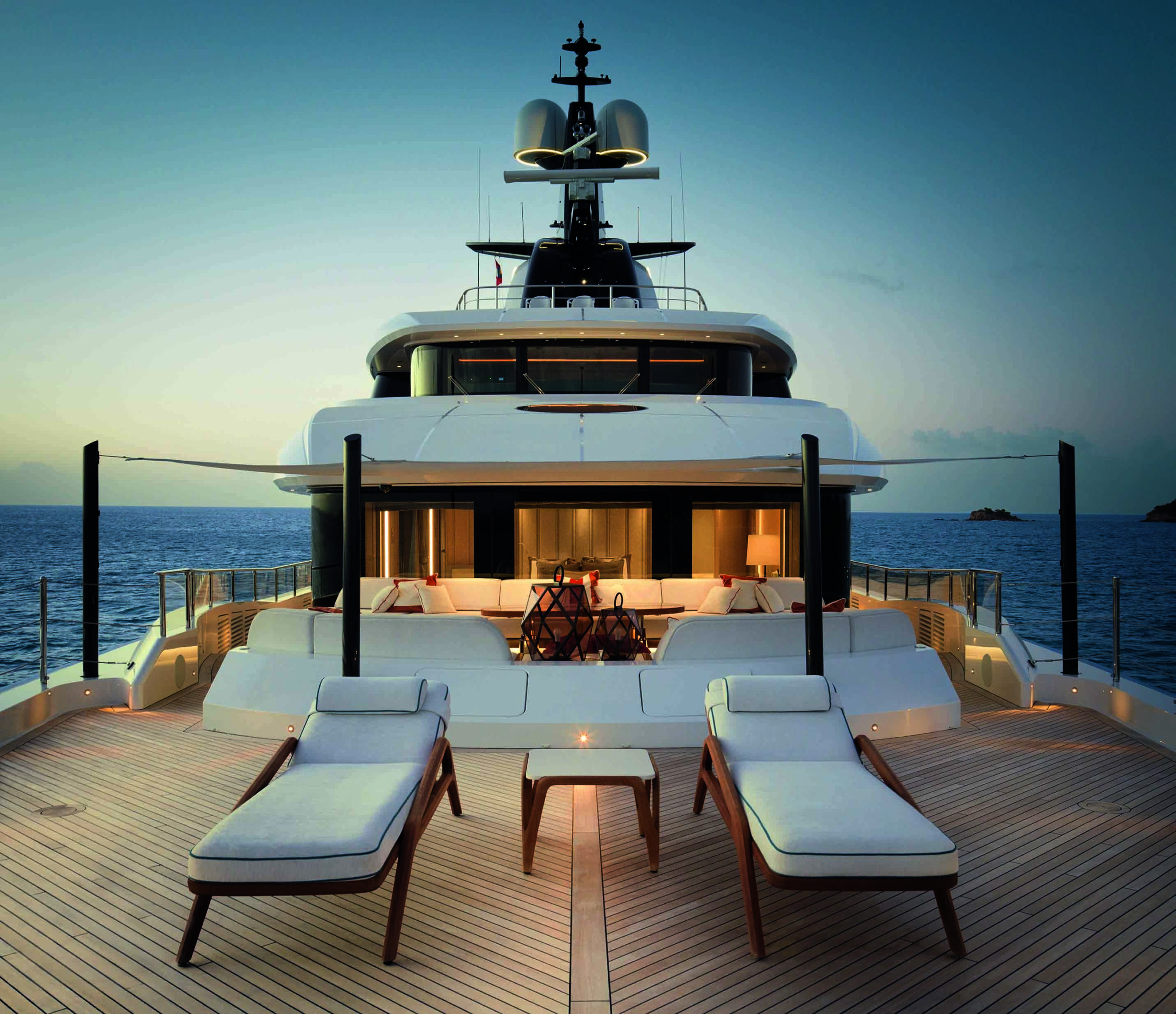
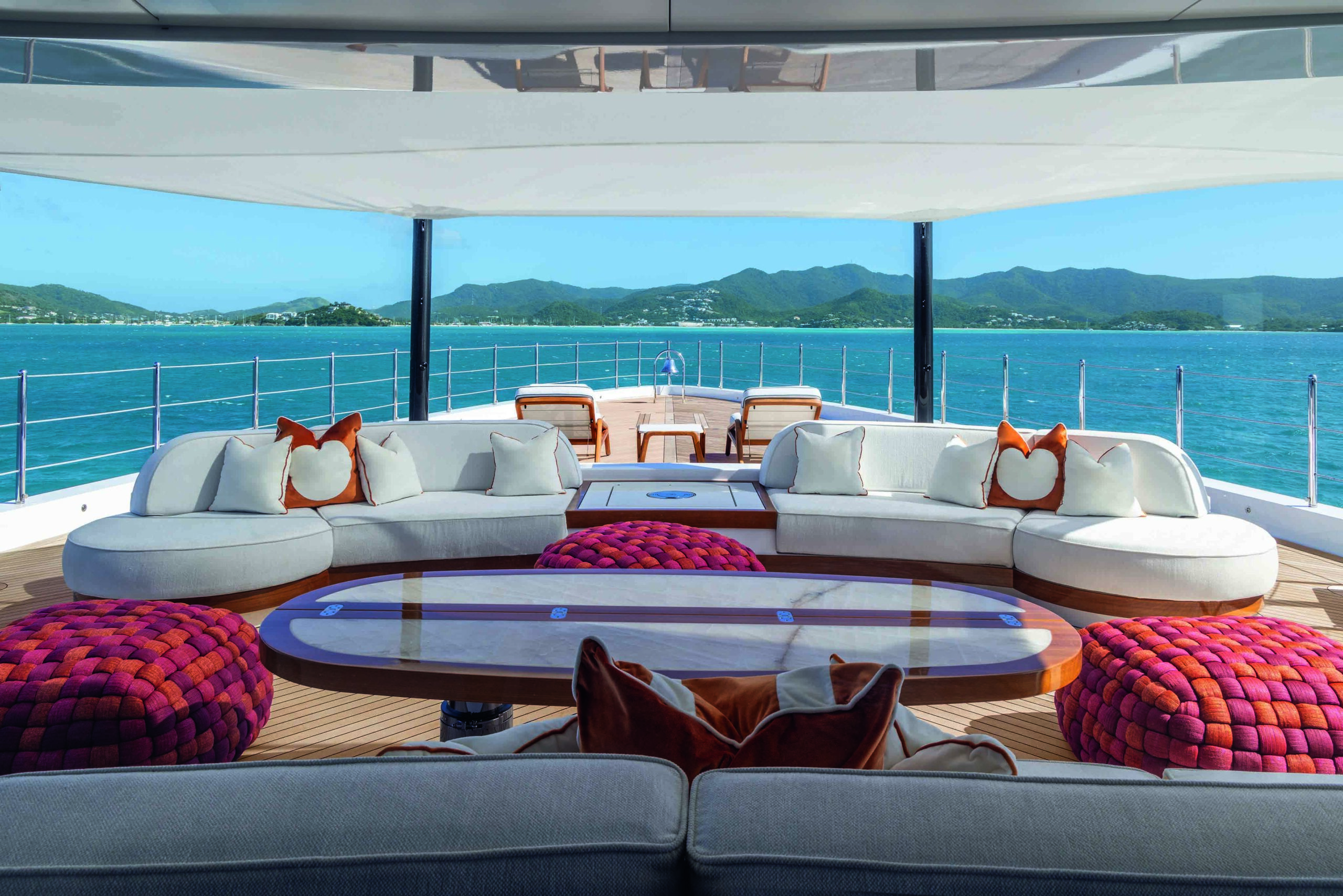
Still on this level, towards the stern, a circular lounge provides an especially convivial setting, including in the evening thanks to two fire pits. Nearby, a teak table with marble inlays can accommodate up to sixteen guests. Finally, towards the bow, a third lounge offers a more intimate atmosphere. Let us now proceed to the lobby, which forms the very backbone of “Amor à Vida”: arranged around a circular lift serving the four principal levels, a spiral staircase has been conceived as a decorative feature, as have the floors – a blend of wood and metal evoking a compass rose and seamlessly extending the cabin flooring – and the glass balustrades engraved with sun motifs. Without further delay, we ascend to the bridge deck, where the wheelhouse is located. Exceptionally well equipped in terms of electronics, yet devoid of a traditional helm – replaced instead by a joystick – it has also been the subject of meticulous attention in its design. The ceiling and bulkhead are clad in leather embossed with an antique map depicting a region of particular significance to the owner: the southern tip of South America and Cape Horn. From here, the captain may access his office to starboard or his spacious cabin to port. Aft on this deck, guests will appreciate a relaxation area comprising a bar with high stools, a lounge, and a Jacuzzi. Let us complete our ascent with a glance at the crow’s nest: while a room houses technical equipment such as the radar, it is above all the panoramic view that commands attention. The sunbathing area and three armchairs may also be transformed into an open-air cinema once night has fallen.
A nautical spirit and complete privacy
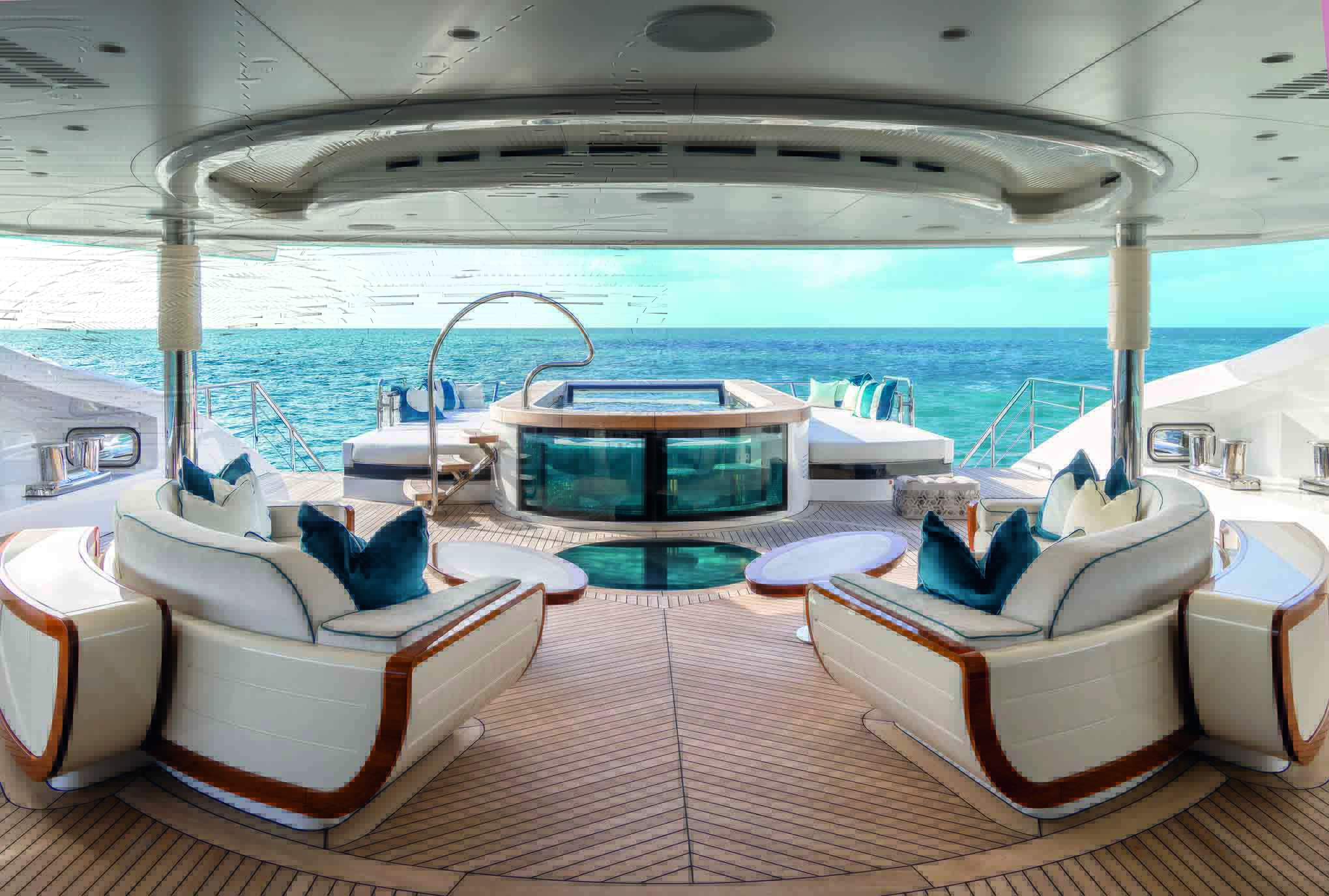
Back on the main deck, the sense of wonder continues unabated. The spaces are, of course, generously proportioned, and the transition between interior and exterior is remarkably fluid. Overlooking the stern, a relaxation area is arranged around a swimming pool adorned with a peacock-blue mosaic, a hue echoed throughout numerous decorative elements, including artworks, rugs, and cushions. For a more intimate atmosphere, the interior lounge, equipped for home cinema use, adjoins a dining table for twelve guests. The nautical spirit is expressed through the use of rope detailing around the table, the bar, and the storage units. Forward, the VIP cabin is so spacious that it may, if required, be divided into two generously sized double cabins. Amidships, the galley is sure to appeal to even the most exacting chefs. It is worth noting that the crew make use of dedicated staircases for service, thereby preserving the guests’ privacy. Towards the bow, a vast garage, with an opening on each side, can accommodate two tenders (an 8.50 metres limousine-type tender and a second measuring 6.20 metres), two jet skis, and a wide array of water toys.
A true fitness and wellness area
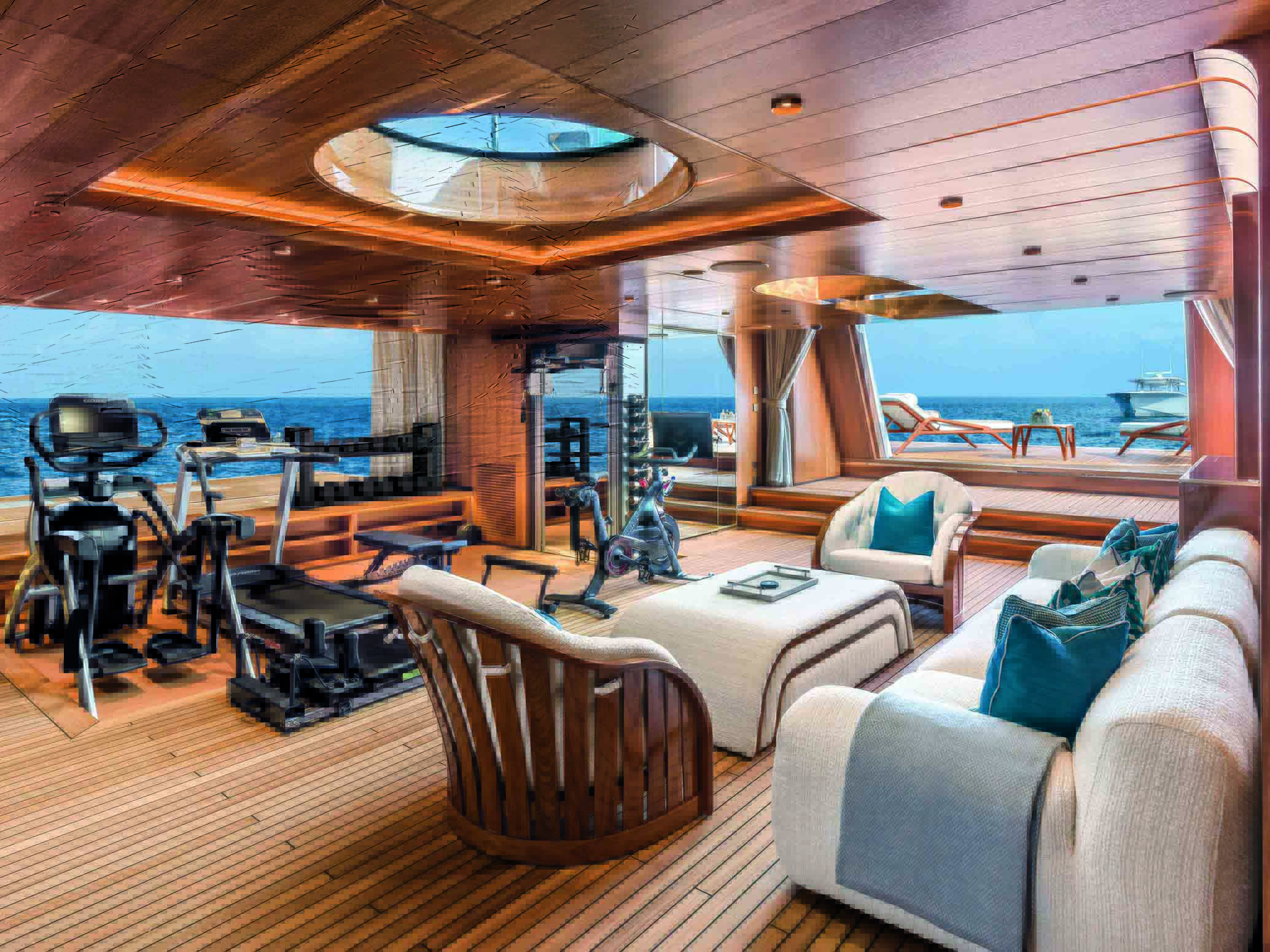
The lower deck is divided into four sections of roughly equal size. Forward, the crew, comprising seventeen members, benefit from a spacious area including cabins, shower rooms, and a mess. Amidships, at the lowest level served by the lift and its circular staircase, four double cabins share the space, each distinguished by a dominant colour (red, orange, blue, and yellow). Next comes the engine room, and the opportunity to consider performance: the hybrid propulsion system, combining two MTU diesel engines of 2,012 horsepower each with two Siemens electric motors of 200 kW apiece, enables “Amor à Vida” to reach a top speed of 16 knots, while, more importantly, delivering a range of 5,200 nautical miles at 12 knots. Extensive research has resulted in an absence of noise and vibration, while an ingenious heat recovery system supplies the pools with hot water. The final section of this deck is devoted to the beach club, an almost understated term given the diversity of activities it offers. Largely open to the sea, thanks to its aft door that retracts beneath the platform and its two lateral terraces, and bathed in natural light through a skylight, it reveals itself as a true fitness and wellness area: sauna, hammam, massage facilities, and gym equipment are all present, along with sun loungers for relaxation after exertion.
Abundant storage and laundry facilities
To conclude, let us descend to the lowest deck, below the waterline. While the greater part of this volume is occupied by tanks and technical equipment (stabilisers, batteries, and the like), beneath the crew quarters are extensive storage areas (refrigeration, freezers, waste management, etc.), along with an impressive laundry room equipped with around a dozen washing machines to support onboard operations. Thus ends our visit of “Amor à Vida”, all too brief in light of the ingenuity and craftsmanship on display. The skill of the artisans and the choice of materials (Javanese teak, sycamore, nubuck, Taj Mahal marble, among others) have done the rest, resulting in a truly exceptional vessel – one created, quite fittingly, for “the love of life”
Technical sheet