Presentation
Yacht Class n°45 june-july-august 2026
Catana Group
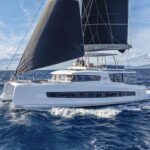
The Bali 5.2 builds on the brand’s core principles by incorporating enhanced energy autonomy and consistently generous living space. A cruising multihull designed for independence, without losing sight of simplicity under sail.
Written by : Nicolas Massines – Photos : DR
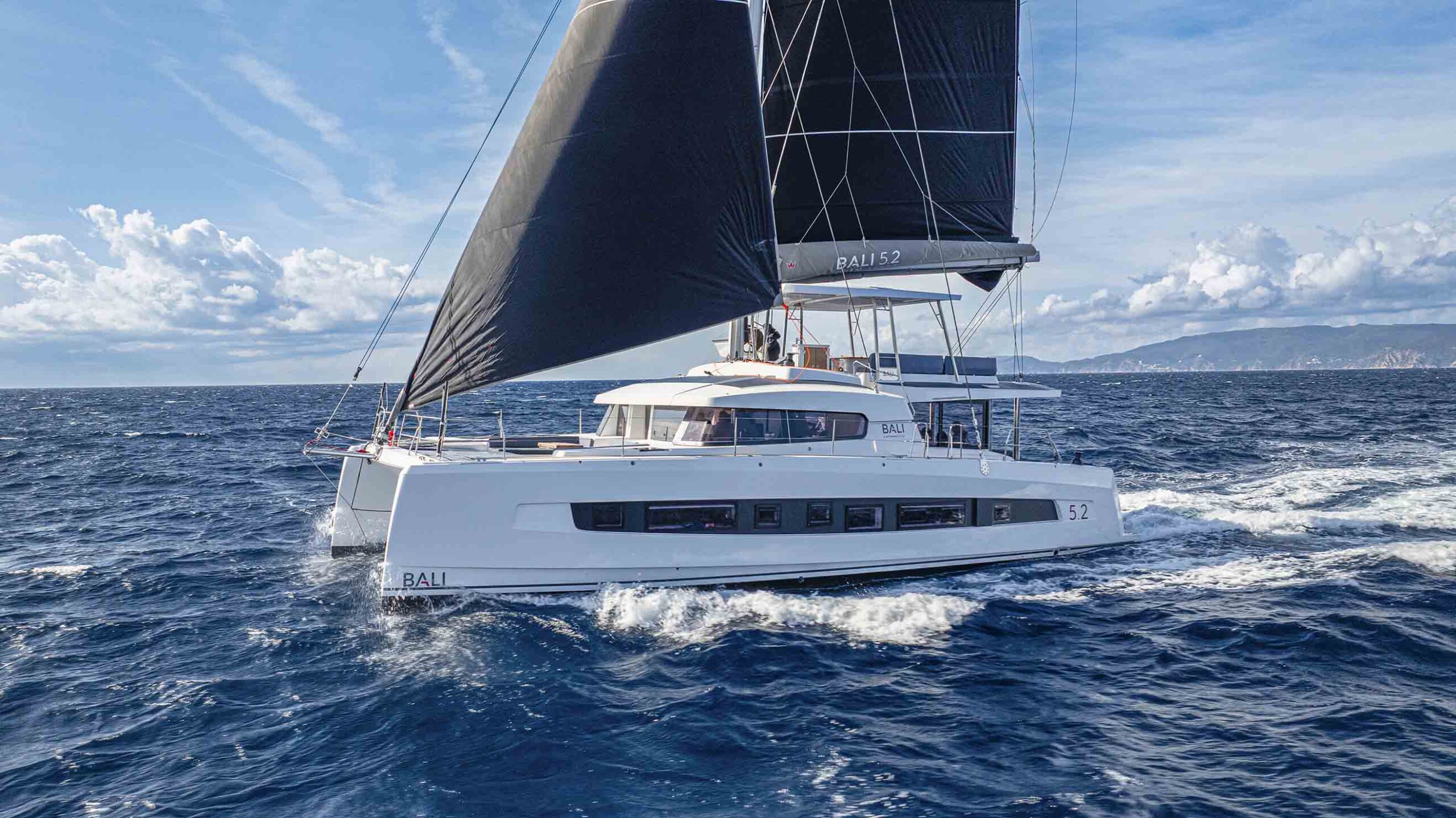
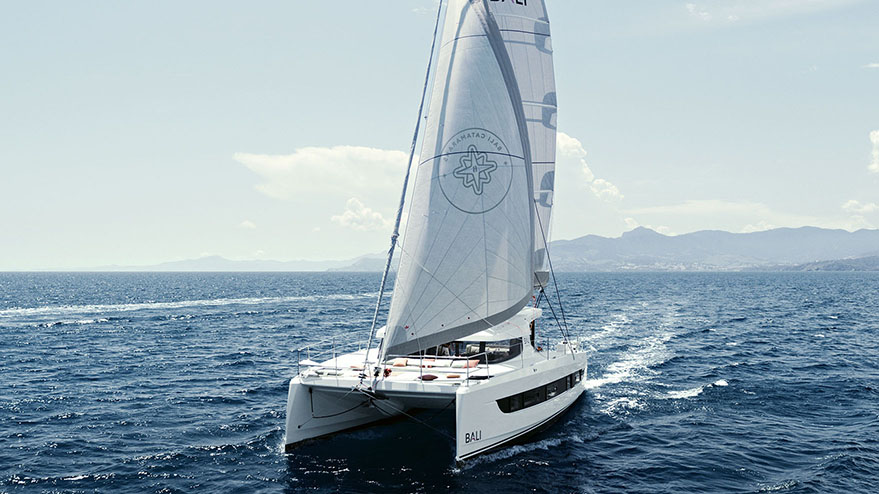
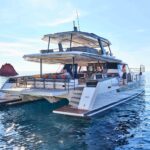
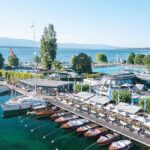
Moored at her berth in Port Pin Rolland, located on the Saint-Mandrier-sur-Mer peninsula in the Var region, the new model from the Catana Group-the Bali 5.2-awaits us. This multihull, measuring nearly sixteen meters in length (15.90 m), is intended to replace both the 5.4 from 2018 and the 4.8 from 2020, which together accounted for more than 600 units sold, as Boris Compagnon, the group’s Marketing and Sales Director, pointed out. “The 5.2 in a way harmonizes the range, maintaining a balanced programme between charter and private use, thanks to configuration options ranging from four to six cabins. We started from the Bali 5.8 and worked with the design studio Piaton Bercaut to elevate the styling,” continues Boris, seated in the spacious interior cockpit. “The initial premise was clear: to build a yacht offering more batteries, more solar panels, greater water and fuel capacity, increased quietness, while preserving the Bali DNA.”
A concept more open to the outdoors than ever
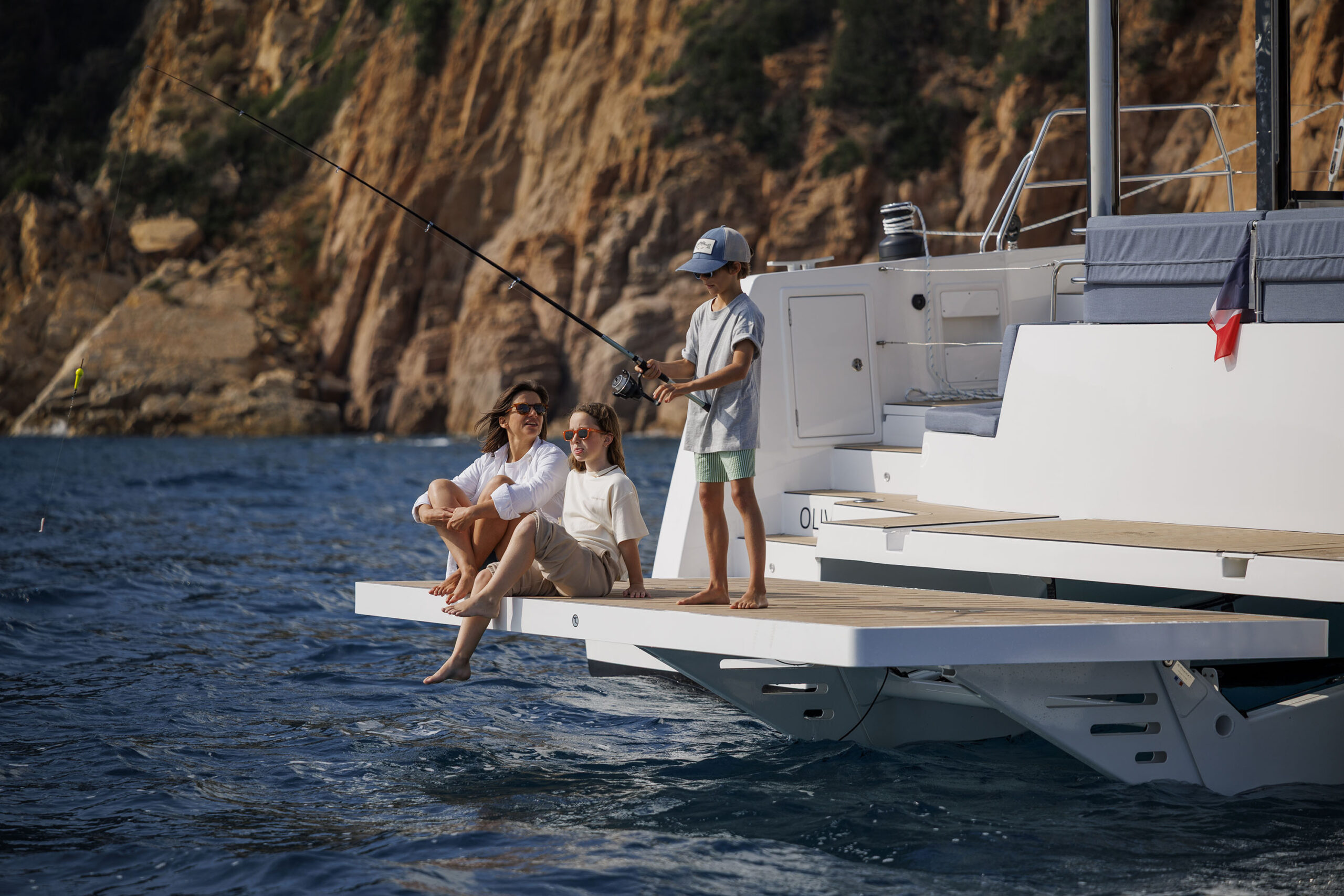
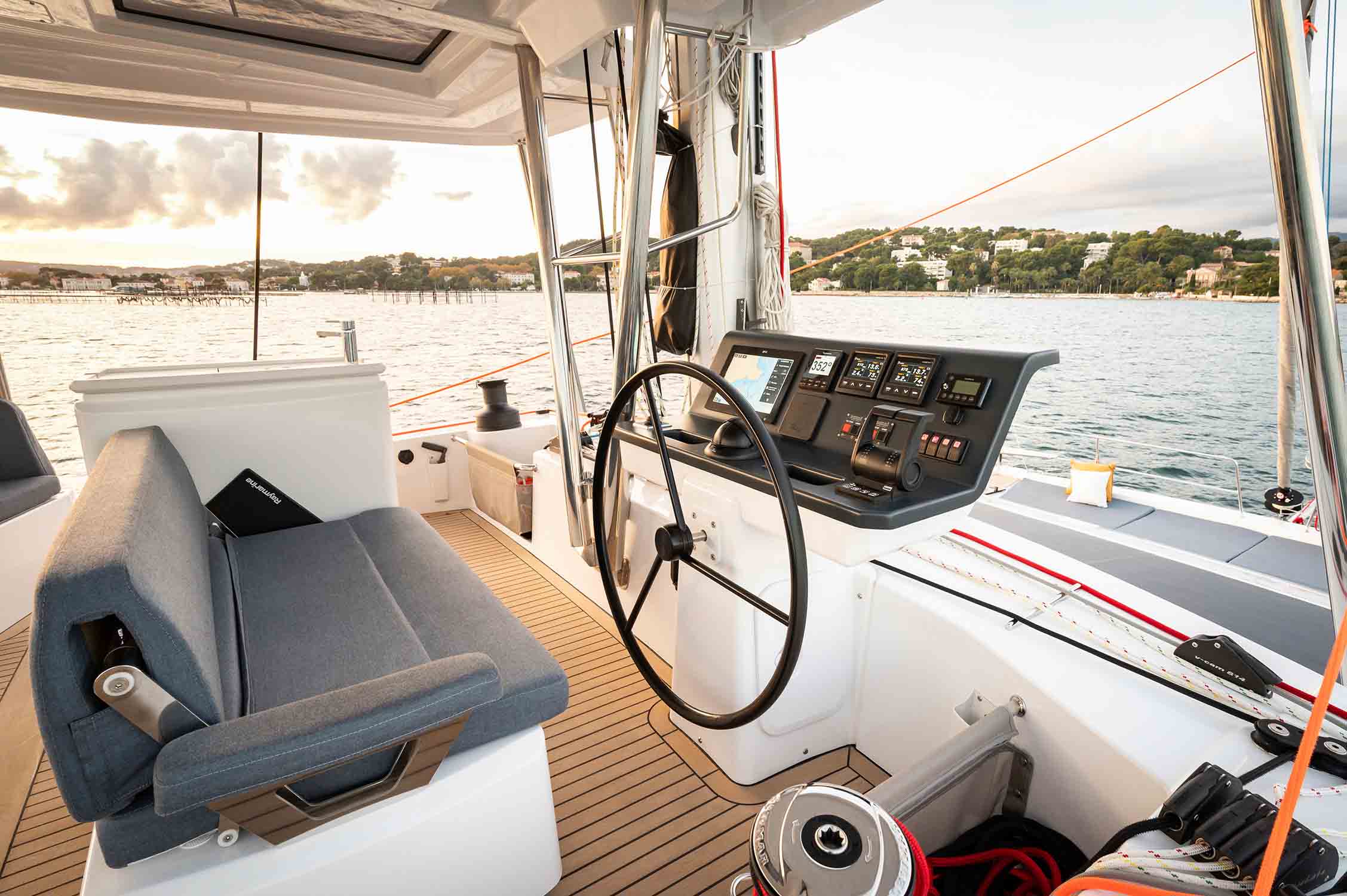
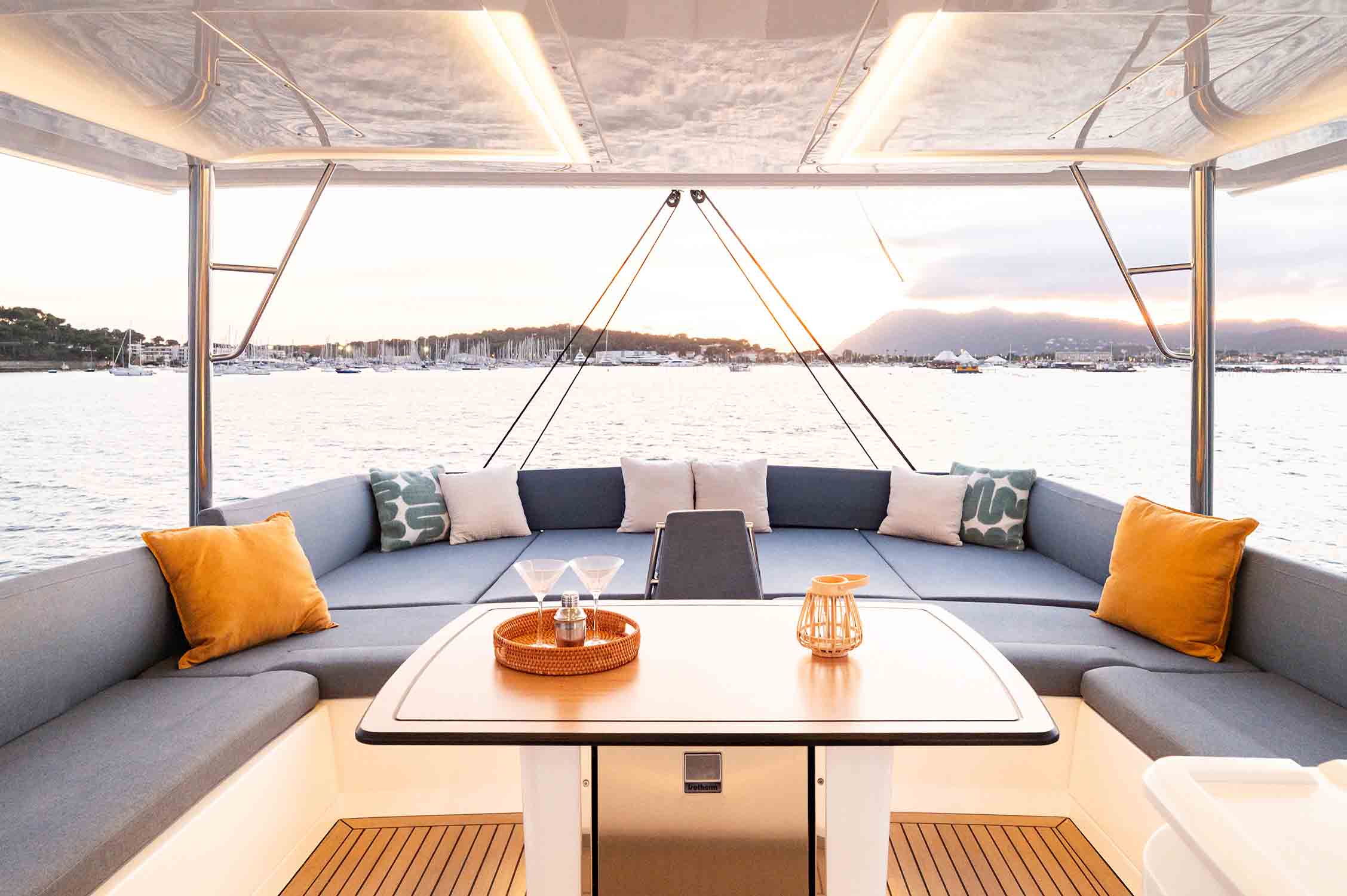
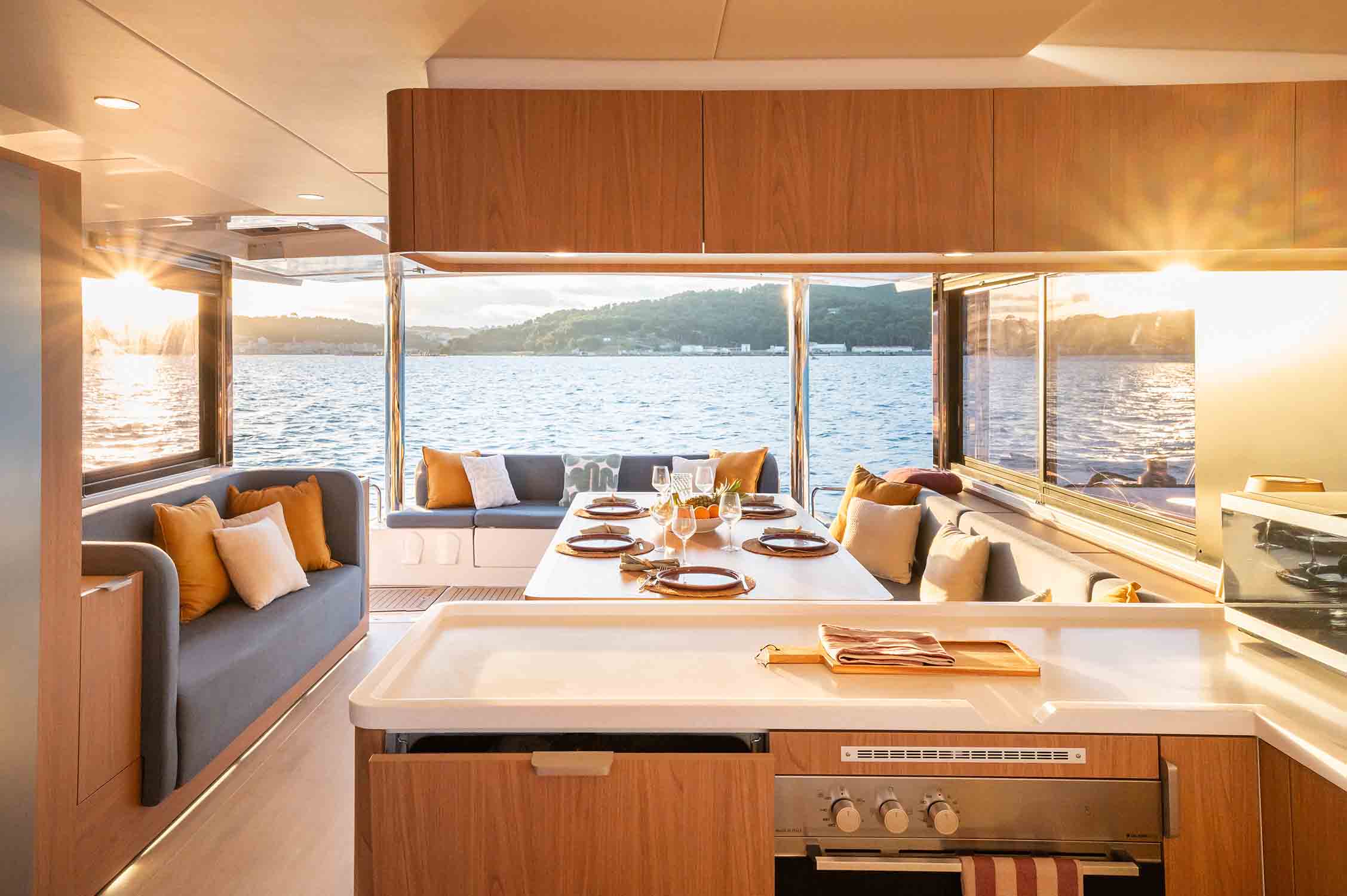
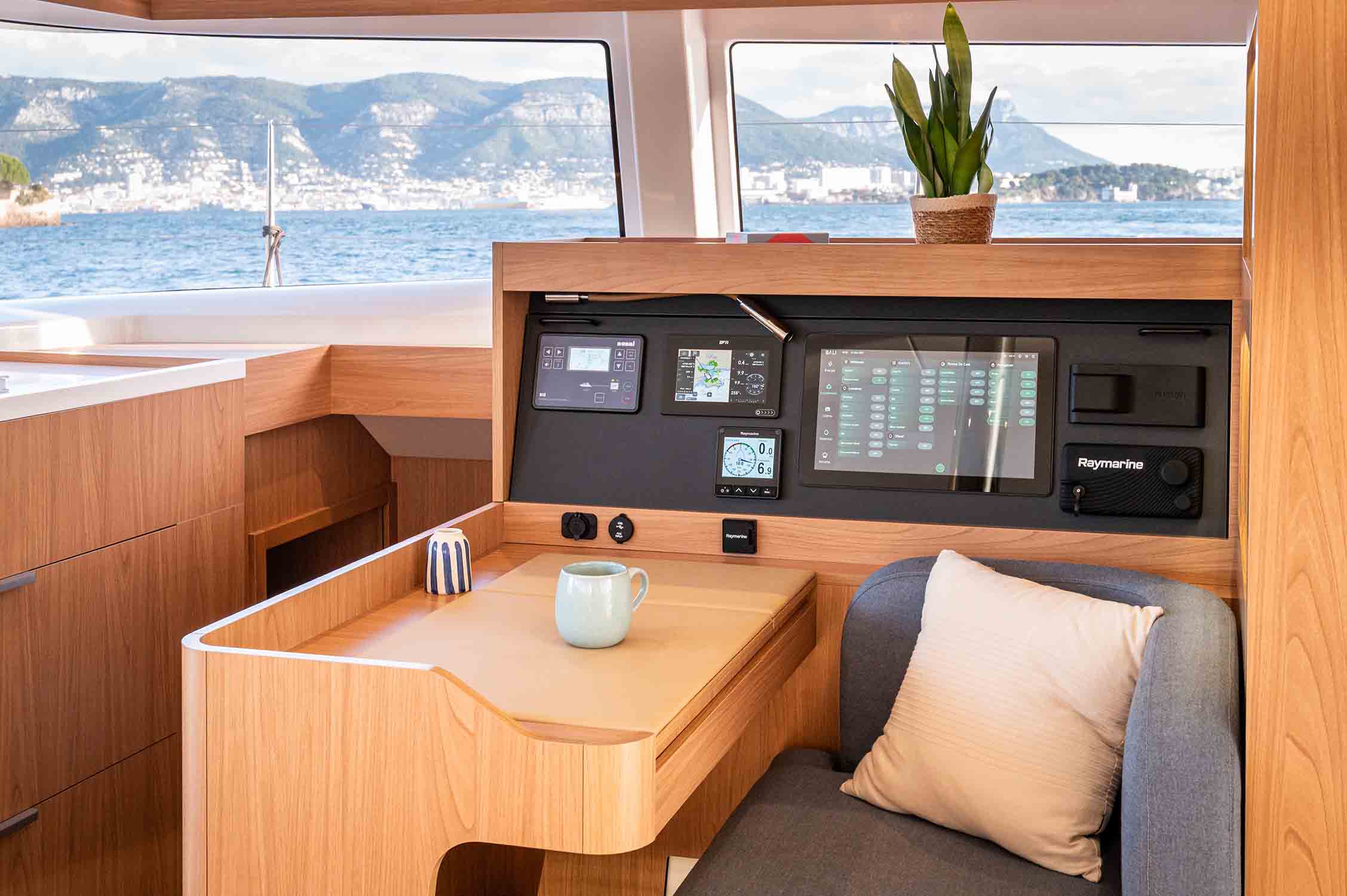
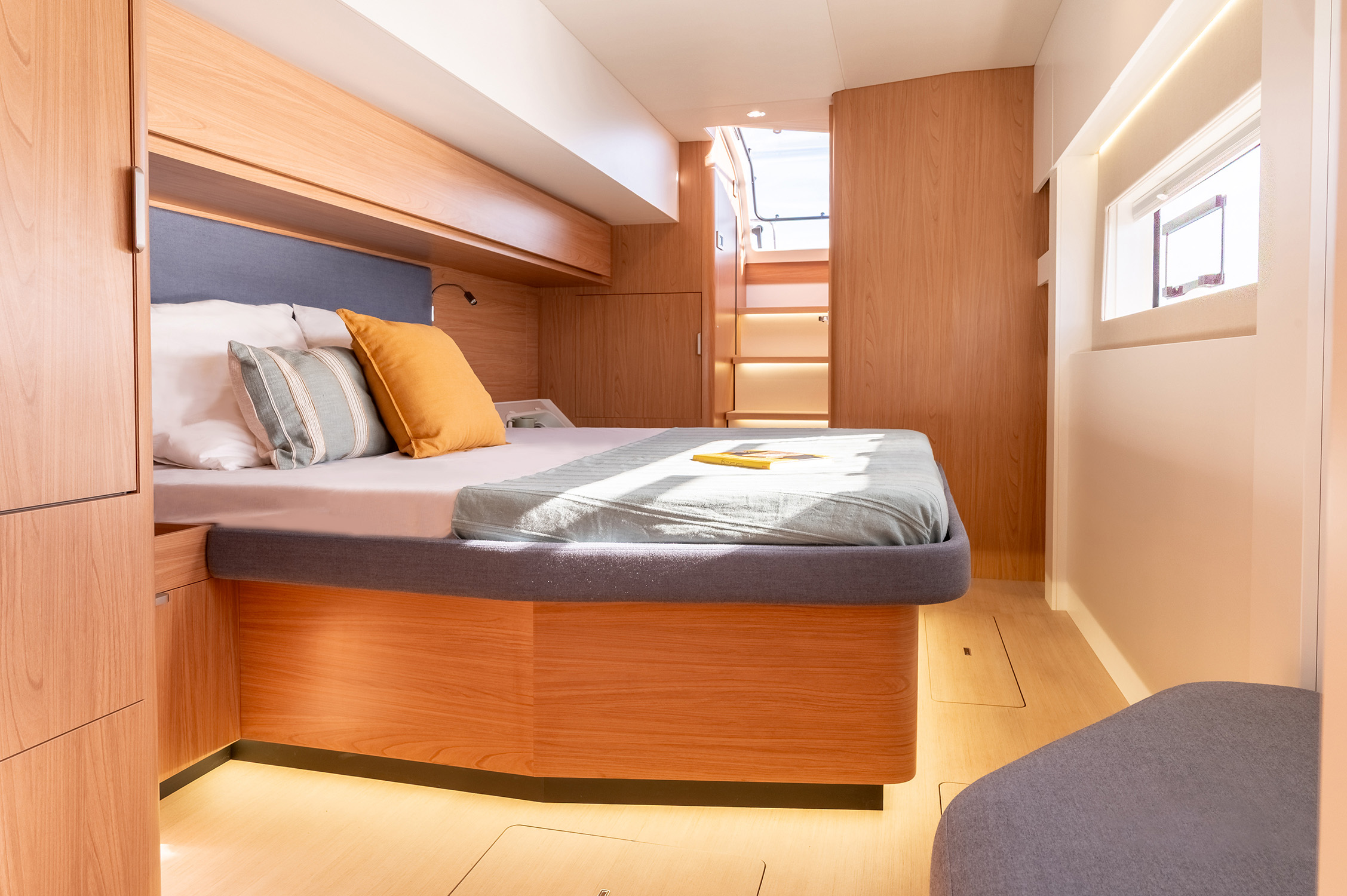
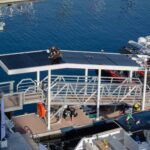
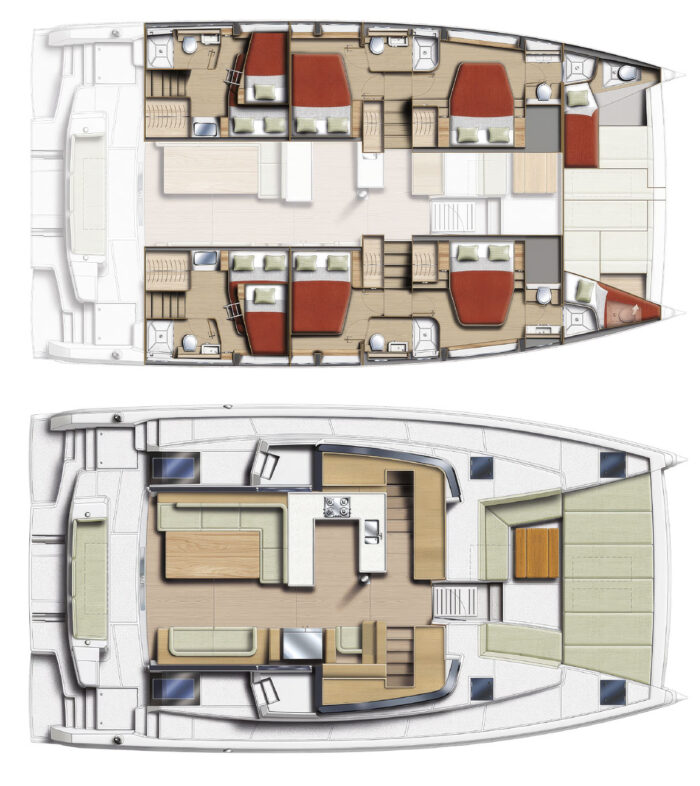
And it is no understatement to say that the Bali signature is very much present on board, with all the hallmarks that have made the brand so successful. There is still a huge tilting swing door opening onto the stern and its large hydraulic platform, capable of carrying a tender up to 4.70 meters in length with a 70 hp outboard engine. Another door, located forward of the saloon, ensures optimal ventilation and circulation. The U-shaped galley, finished in white Corian, is positioned to port, while a well-designed chart table sits to starboard near the forward companionway. The saloon table can accommodate up to twelve people, justifying the presence of a large refrigeration system for extended stays. We are aboard a unit configured in a four-cabin layout, three of which are arranged on the starboard side, while the port hull is reserved for the owner. It features a second access from the aft cockpit, a berth positioned athwartships, a dressing area, and a large bathroom occupying the entire forward section. The aft starboard cabin also benefits from this separate access, a feature always appreciated on long cruises. From the very first steps on board, it is clear that circulation is a priority for the shipyard, which has ensured wide side decks for safe and comfortable movement. The foredeck, still fully decked over, offers enough seating and lounging space to accommodate all passengers on board. This area, well secured by high lifelines, also includes large storage lockers to keep the deck clear once the lines are cast off and the fenders stowed away. Making our way back towards the midship section, we ascend to the flybridge via one of the two gently spiralling staircases and discover a coachroof and the upper section of the cockpit overhang studded with solar panels, generating no less than 4,200 Wp of power. This output, combined with a 48-volt electrical system and lithium batteries, makes it possible to dispense entirely with a generator. The flybridge above all constitutes the nerve centre of the Bali 5.2, thanks to its expansive and adaptable social area and its centrally positioned helm station at the foot of the mast. The height of the boom, however, necessitates careful preparation in advance when reefing, for instance, as the passage towards the far end of the flybridge may prove somewhat delicate while under way.
Under way, a balance emerges between comfort and performance
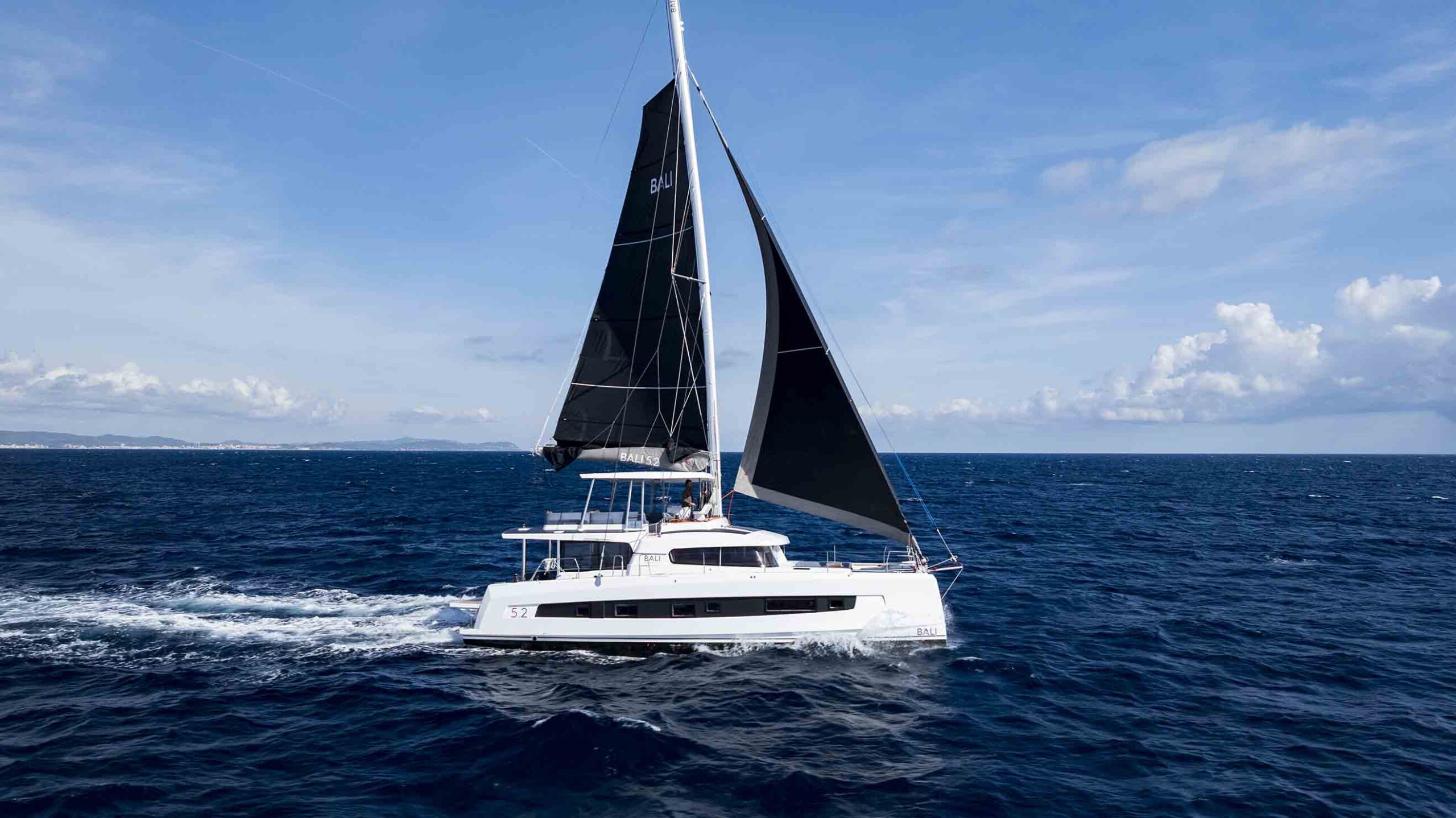
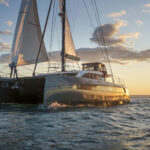
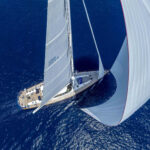
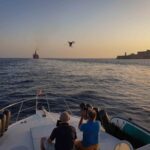
This will not, however, be fully put to the test during this sea trial, as the wind does not exceed 15 knots. In terms of rigging, while a self-tacking jib is available as an option, the test vessel is equipped with an overlapping genoa and a square-topped mainsail by Elvström. Pending the possible introduction of a future hybrid-electric propulsion system, the twin 80 hp Nanni engines allow us to leave the harbour at the regulated speed of 3 knots at 1,000 rpm. Once clear of the harbour, heading into the wind and increasing the engine speed to 2,200 rpm, the Bali 5.2 settles into a cruising pace of 9 knots, a commendable figure. The electric winch on the flybridge enables effortless hoisting of the mainsail and unfurling of the genoa on starboard tack. With 15 knots of true wind at 40 degrees apparent, the boat speed reaches 6.2 knots. The sea state is sufficiently calm to tack and link manoeuvres with minimal loss of speed. While the helm does not offer the responsiveness of a racing yacht-each vessel to her own purpose-it nonetheless allows for accurate tracking of gusts, and the Bali 5.2 proves docile and predictable when altering course. As the wind eases slightly to 12 knots, on a beam reach the speed over ground stabilises at 7 knots. The genoa is furled shortly thereafter to deploy the Code 0, bringing the speed up to 9.5 knots at 100 degrees true wind angle. The structural rigidity of the whole produces no parasitic noise: no creaking or unwanted resonance is detected, confirming the overall build quality. A spectacular and rather uncommon sight in the maritime world compels us to comply with the COLREG (International Regulations for Preventing Collisions at Sea) and to curtail our trial, following the appearance of the aircraft carrier Charles de Gaulle, heavily escorted.The mainsail is lowered and the Code 0 furled with great ease before returning to the harbour and our berth. This also provides an opportunity to test the efficiency of the bow thruster, positioning the nearly 20 tonnes of the Bali 5.2 with centimetre precision and notable ease, particularly with a reduced crew. In conclusion, this sea trial highlights the versatility of the Bali 5.2 that will appeal to private owners wishing to acquire a yacht tailored to their preferences, thanks to well-considered options, refined interior design and high-quality living spaces on board. At the same time, she is equally suited to charter operators, with her multiple configuration possibilities, energy autonomy and ease of handling.
Technical sheet