Presentation
Yacht Class n°44 (march-april-may 2026)
Leopard – Robertson & Caine
Innovations on all decks, the option of hybrid propulsion and excellent seaworthiness make the successor to the Leopard 45 an attractive vessel tested in the south of France.
Writtenby : Nicolas Massines Photos : Nicolas Massines et DR
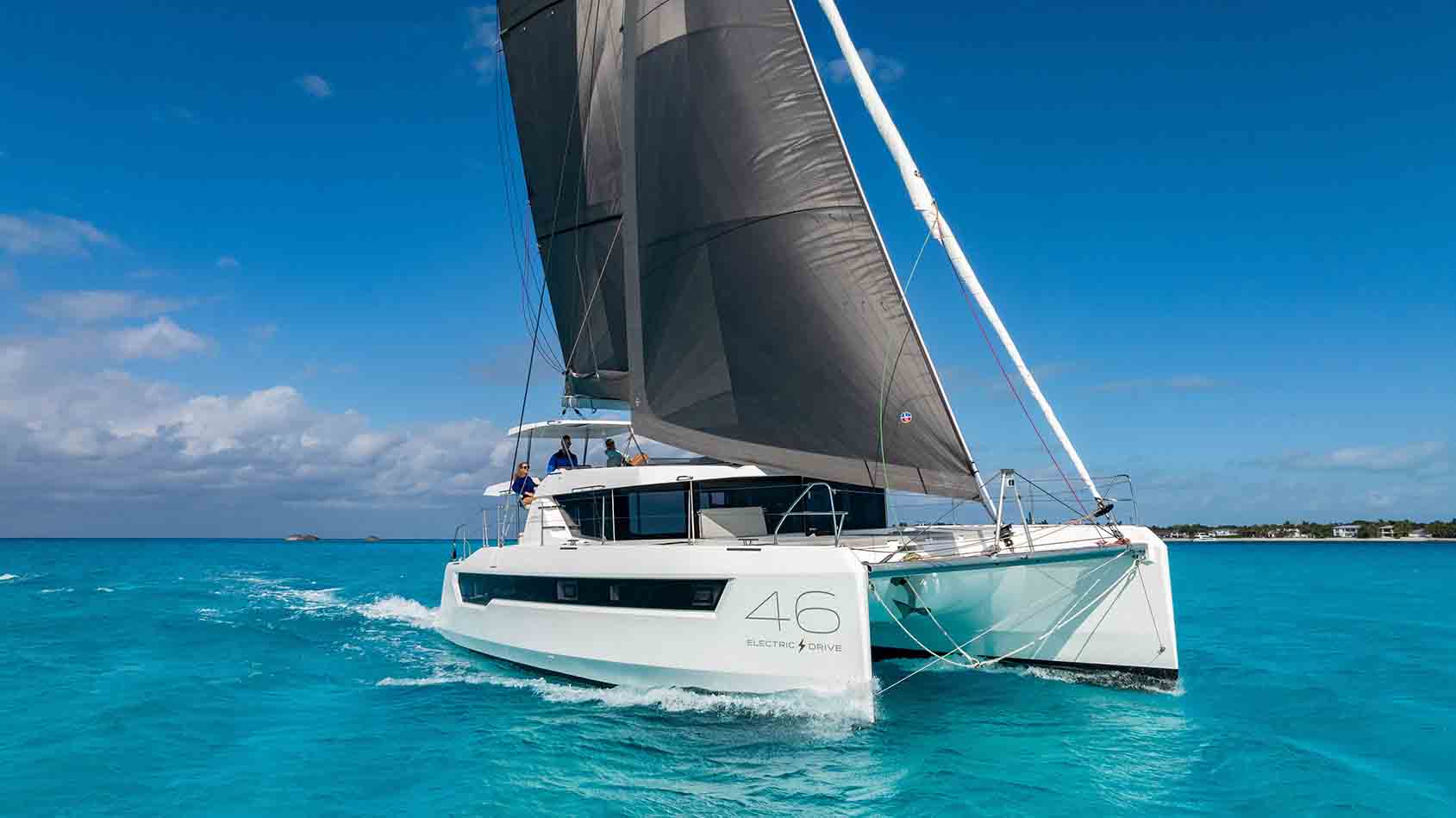
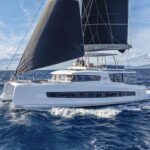
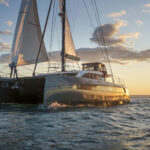
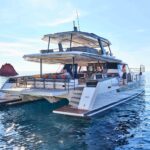
The waters of Saint-Raphaël are ideal for sailing aboard the new Leopard 46 Electric Drive, the replacement for the 45-foot model that sold successfully with nearly 400 units sold. For once, we shall start our tour at the mast, which has been lengthened by one metre compared to its predecessor to provide more power under sail. Staying with the rigging, let’s mention a 110% overlapping genoa at the bow, ideal for those looking for ease of manoeuvring, especially with a small crew. On the mainsail side, there is no traveller; instead, a tensioning system is installed, using two tackles located right at the very rear of the coach roof.
From the mast to the connecting arm, innovations come on board
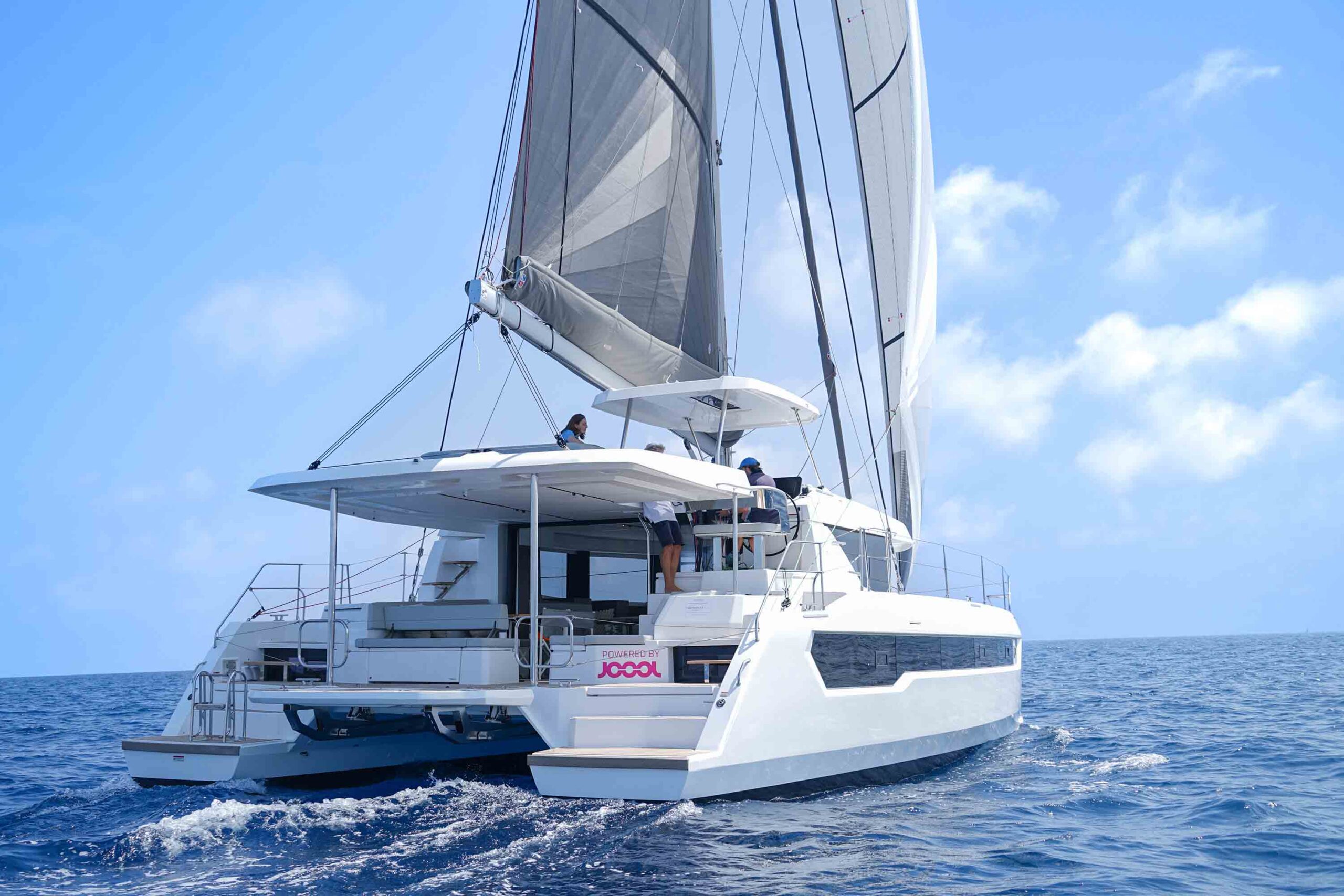
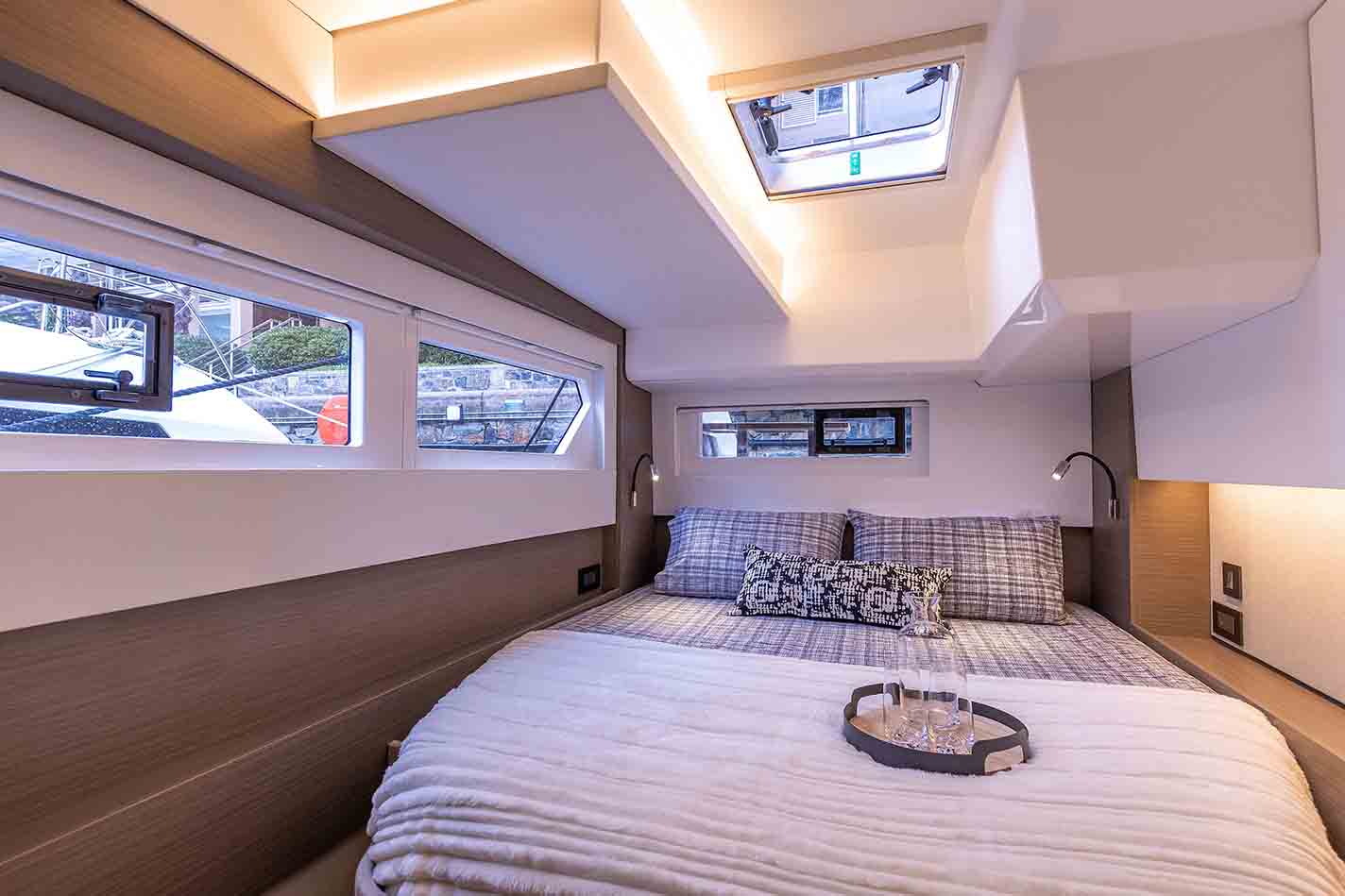
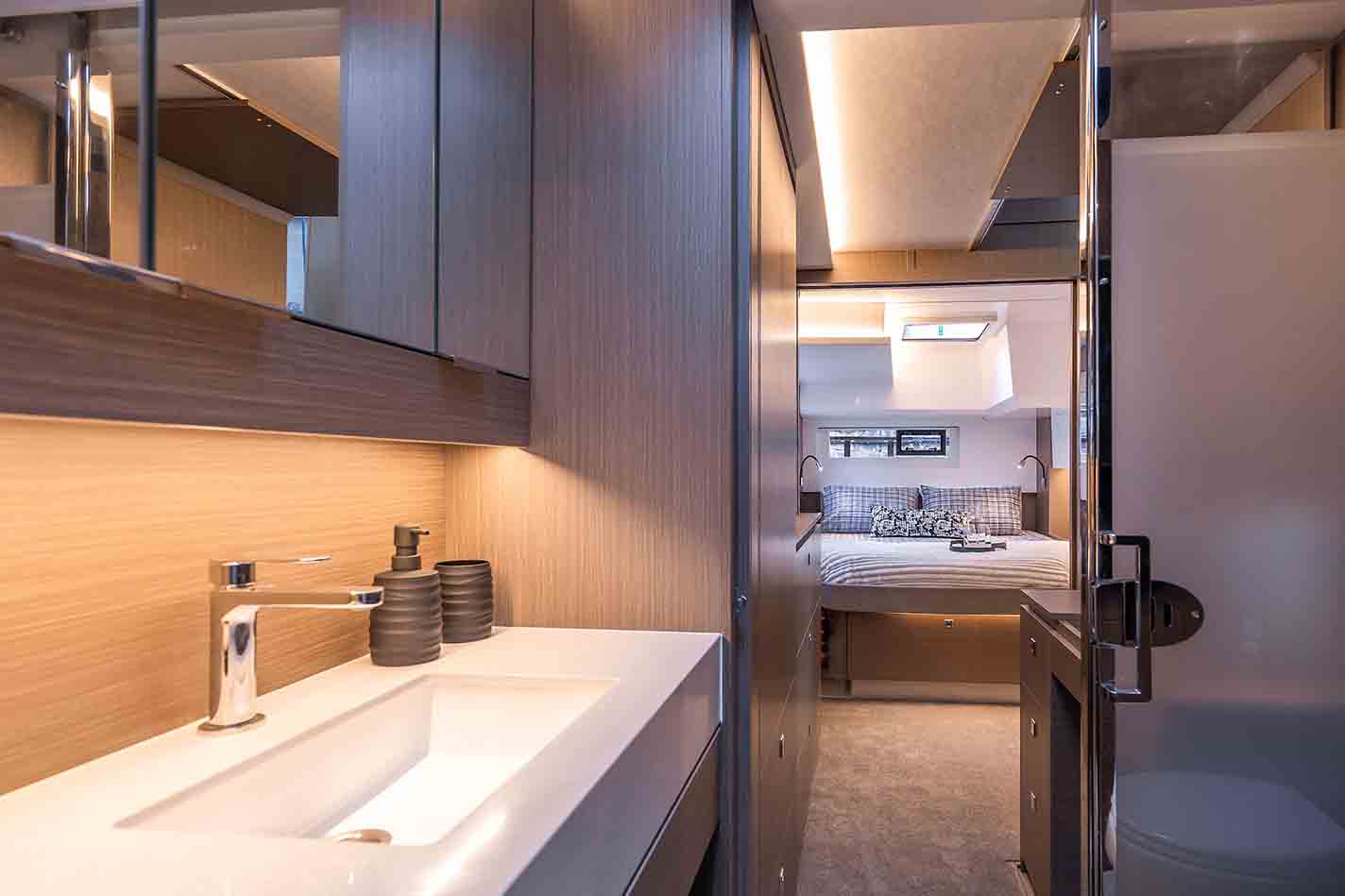
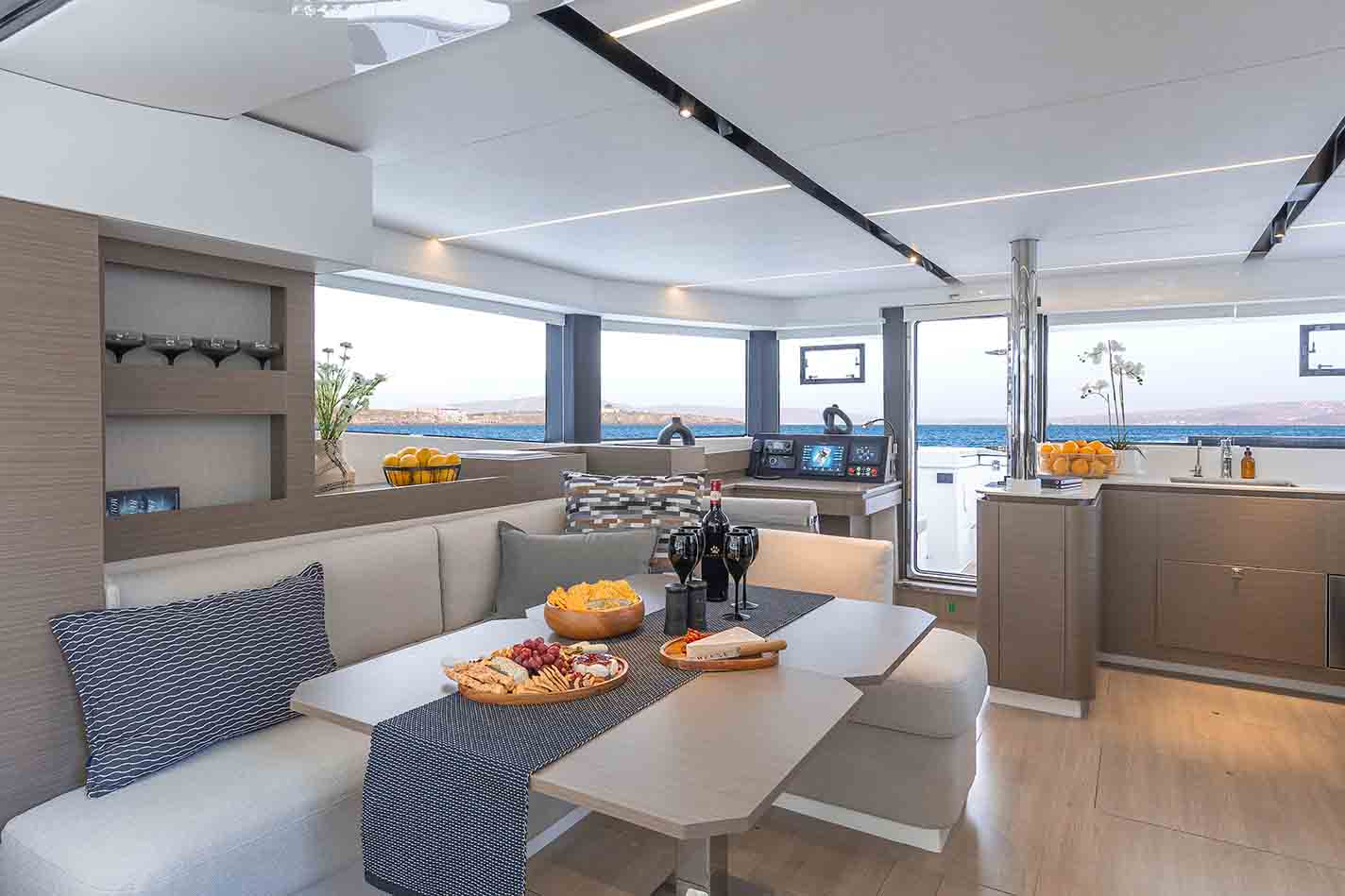
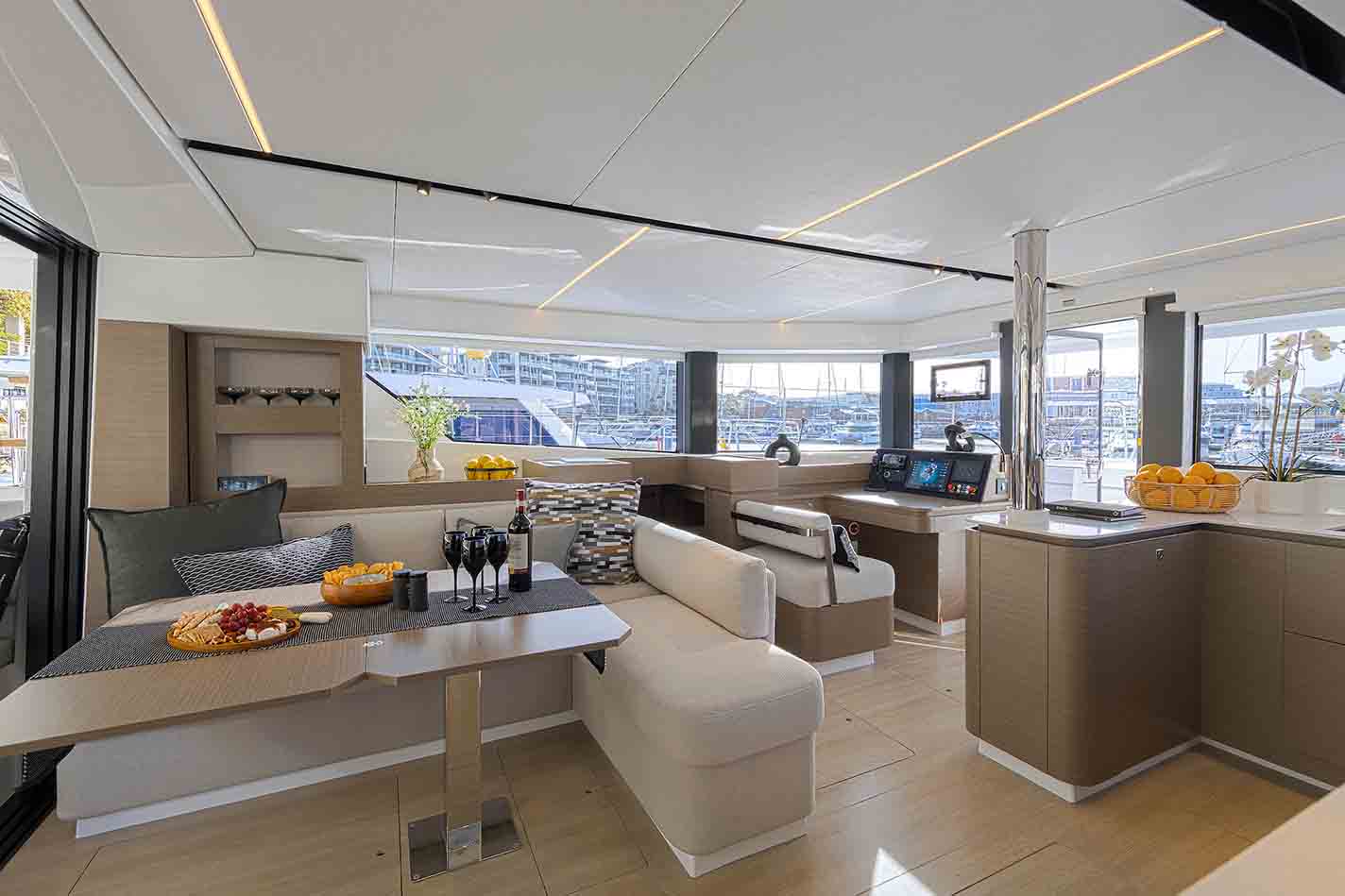
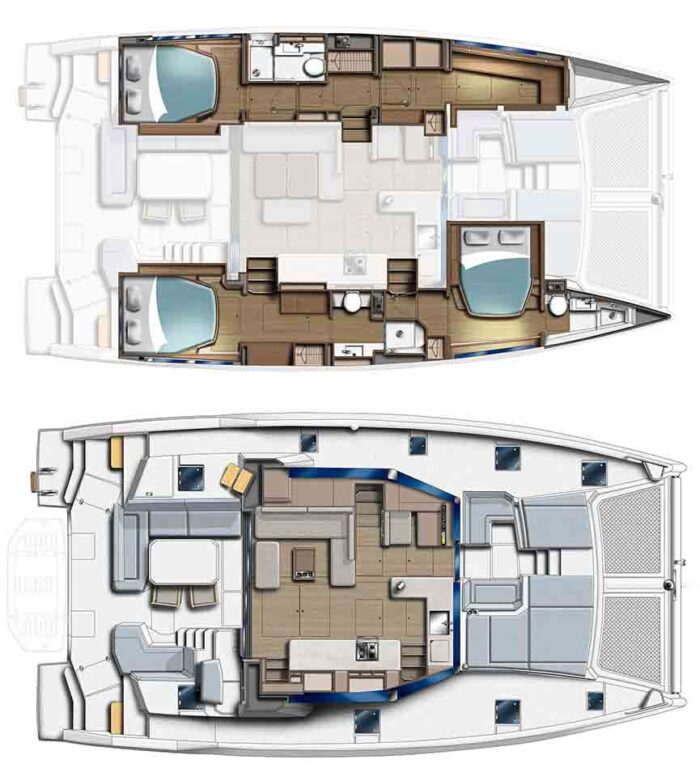
Looking at the multihull from a distance, we notice more pronounced bilges than the previous model, with a more taut line effect, and from the rear, it is the electric hydraulic platform that catches our attention. It allows a tender longer than its support to be launched thanks to retractable cradles and its deployment towards the rear well beyond the stern platforms. Once on board, the aft cockpit proves to be secure, shaded and rather cosy. A large sliding glass surface allows us to enter a very bright, fluid saloon, with the chart table and galley located at the front facing the step. This layout is always very popular. Two separate companionways for greater privacy lead to the starboard hull, which, in this 3-cabin and workspace version, houses the owner’s cabin at the rear. A double cabin, perpendicular to the direction of navigation, is located at the front, and the port forward hull is dedicated to “a utility room”. The Leopard 46 Electric Drive is also available in 4 or 5 cabin versions. Structural innovations include composite bulkheads, which reduce weight by limiting the use of wood. The connection between the two hulls is reinforced with a steel beam for greater rigidity, and the large panels in the saloon are now made of treated glass, a feature inherited from the motorboats produced by the South African shipyard. A secure watertight door provides access to the deep forward cockpit, which is also shaded by a well-designed roof extension. At the bow, the net area has been reduced to accommodate the permanent cushions of the large relaxation area. Back on deck, the helm station is accessible via a staircase on the starboard side of the cockpit, where two people will find generous seating and the protection of a bimini top. The lounge area, located on the flybridge, is accessed via a flight of steps on the port side.
Electric motors equivalent to 75 horsepower
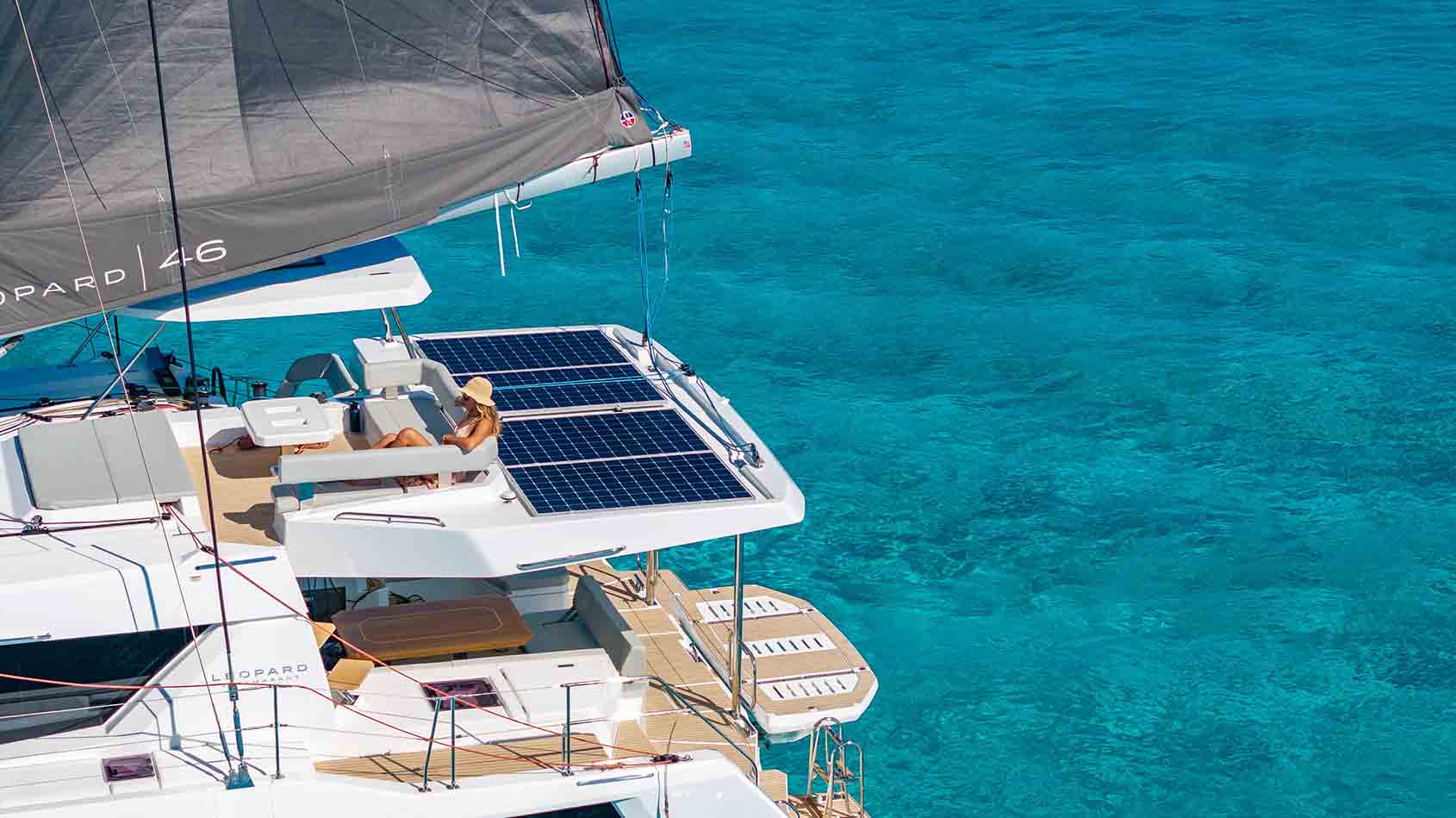
In terms of motorisation, the Leopard 46 Electric Drive provides an optional hybrid motorisation consisting of a conventional diesel engine with 45 or 57 horsepower and an electric motor developed by the French company Joool, which can be powered in several ways: shore power, generator, solar or wind power, and finally hydrogeneration from 4 knots. This energy is then stored in two 27 kW batteries and transmitted to two 25 kW motors coupled to pods, representing the equivalent of a 75 horsepower combustion engine, all to provide silence on board and great energy autonomy. For now, the mooring lines have been cast off and we leave the harbour in almost total propulsion silence. The very fine throttle levers allow for precise power control, which is a plus for the helmsman. With the halyards and sheets returned to the helm, manoeuvres are simplified and do not clutter the deck or the upper relaxation area. The mainsail and genoa are quickly hoisted on the port tack in seas barely disturbed by the 12-knot wind. At 45º to the wind, the speed stabilises at 4.4 knots and the helm is responsive, allowing us to quickly follow the wind shifts as the gusts pick up. Responsiveness is key when bearing away a few degrees. The wind drops, the headsail is furled in about ten seconds and the Code 0 is deployed. Heading towards the Gulf of Saint-Tropez, in 8-knot winds, the speed stabilises at 5 knots.
When manoeuvring, the quiet engine allows for better communication.
While the Leopard 46 continues on her way, we take the opportunity to move around and step onto a boat with a multi-level deck, which takes a little getting used to. Care must be taken with the shrouds when using the gangways. The interior space is as pleasant when sailing as it is at anchor: the ventilation and panoramic view will be greatly appreciated by sailors. Once the sails are lowered, it is time to switch to electric propulsion to head for port: at 6.5 knots, the range is 2 hours and 10 minutes, and 1 hour and 10 minutes at full speed, i.e. 8.4 knots. It is a pleasure to manoeuvre in silence, allowing for better communication on board, and to enjoy a long range at anchor without disturbing the surrounding calm by starting up a generator. It is therefore very easy to imagine oneself on the Leopard 46 Electric Drive surrounded by friends or family: her layout and safety features are major assets, especially for those who want to take younger passengers on board. Her aesthetics, ease of navigation, the shared pleasure of being at the helm and the possibility of sailing in silence are further arguments in favour of this new South African multihull.
Technical sheet